
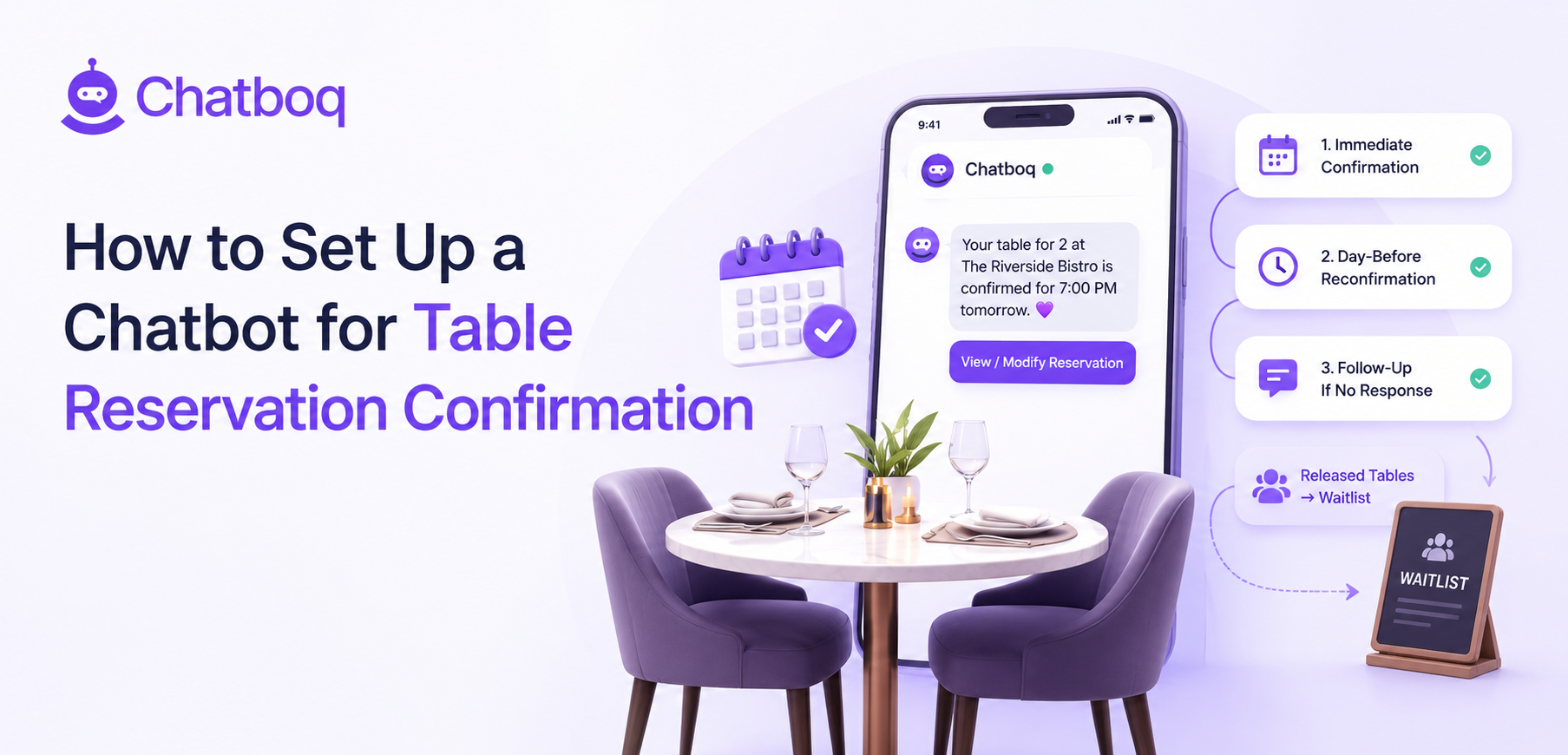
Three messages do the work: immediate confirmation, day-before reconfirmation and a follow-up where there is no response.
At booking
The immediate confirmation is the record diners return to, so it should contain date, time, party size and anything about the booking that differs from default.
A calendar attachment materially improves attendance and costs nothing to include.
The day before
This is the message that converts uncertain bookings into either confirmations or freed tables, and it is the one most restaurants do not send.
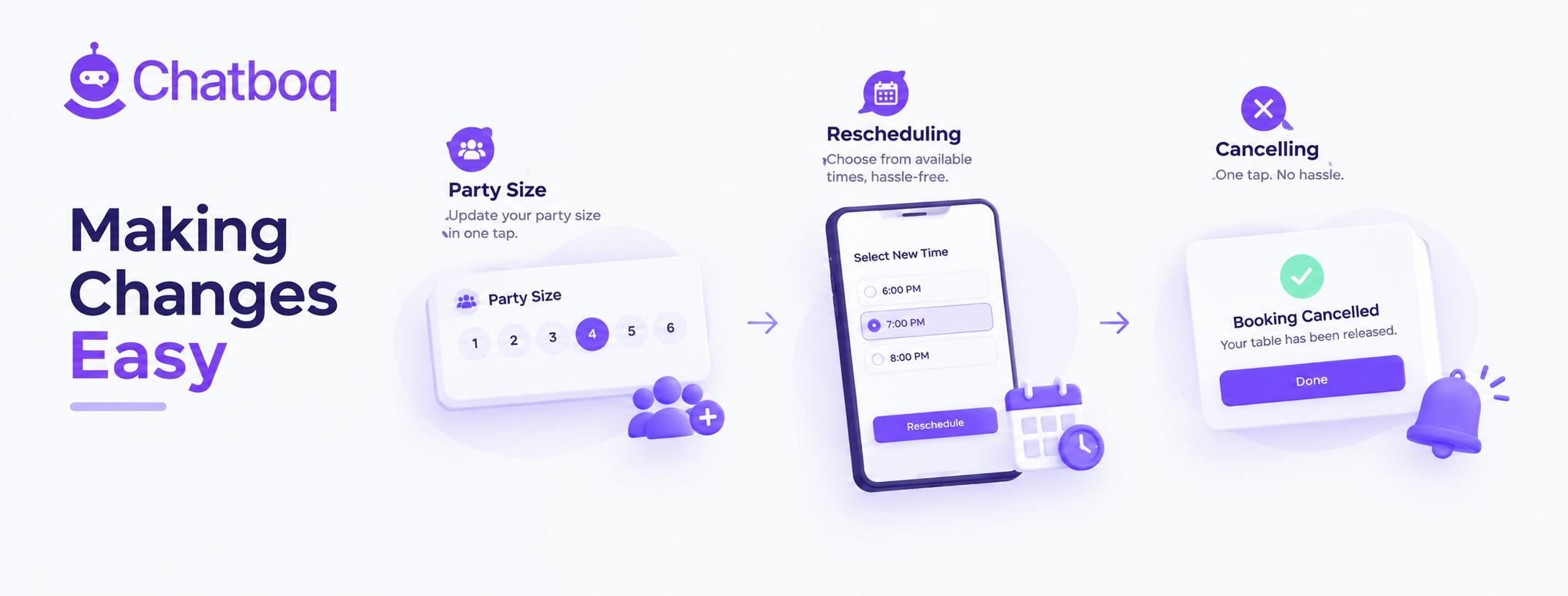
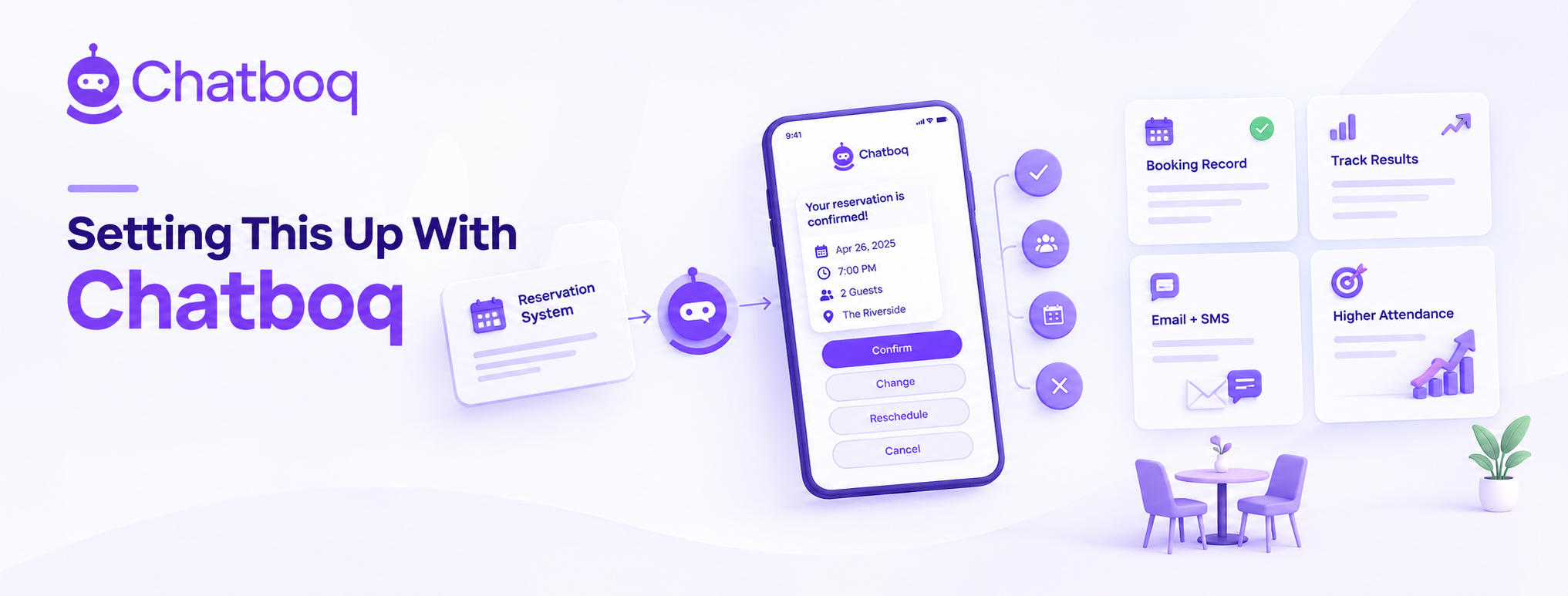
One-tap confirm, change and cancel is what produces the high response rate rather than a request to call.
Where there is no response
A short follow-up on the day, stating what happens if you do not hear back, converts most non-responses into a response.
Whether to release the table matters only where there is demand to fill it, which makes this policy rather than default.
Bookings made far ahead
A booking made weeks in advance benefits from an additional reminder a few days out, since the day-before message may be the first the diner has thought about it.
This is where most forgotten bookings originate and where the additional message pays for itself.
Not over-messaging
Four or five messages for a single booking crosses from helpful into irritating, and diners will stop reading all of them.
Three is the practical maximum for a standard booking, with a fourth justified only for bookings made far ahead.
 ChatGPT
 Perplexity
 Claude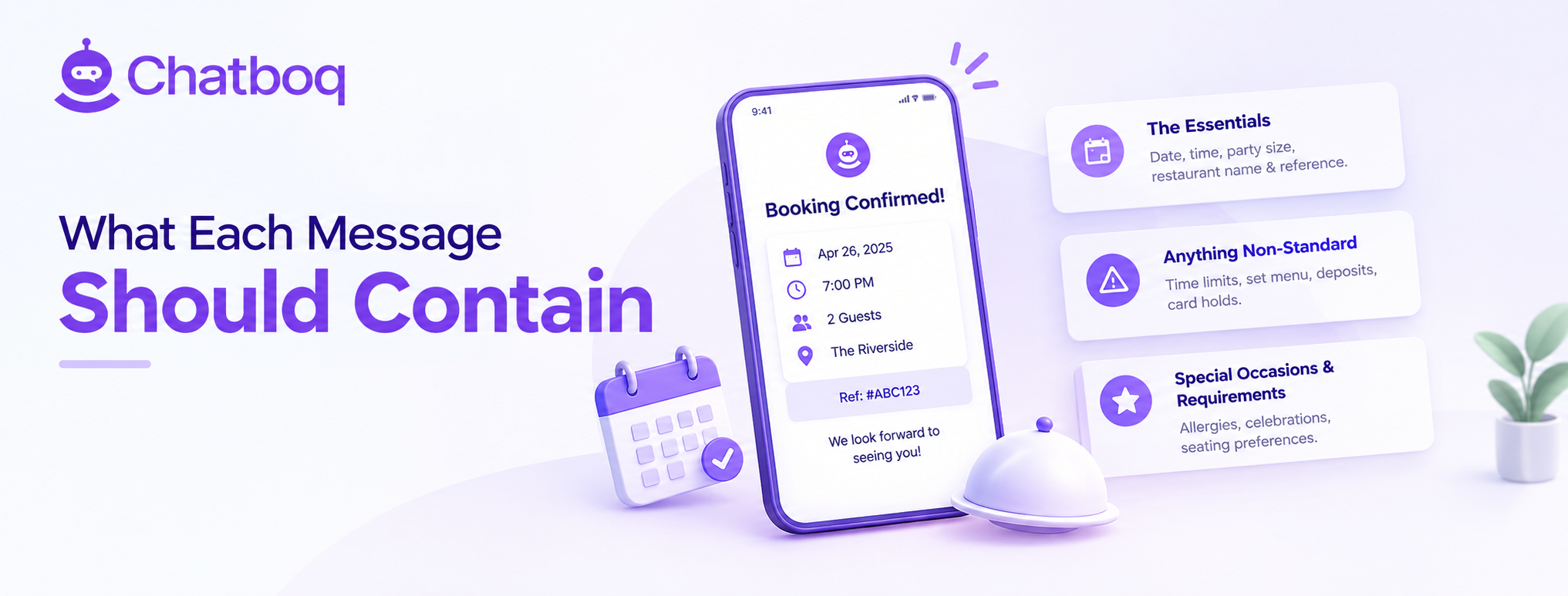



Leave a Comment
Your email address will not be published. Required fields are marked *
By submitting, you agree to receive helpful messages from Chatboq about your request. We do not sell data.