
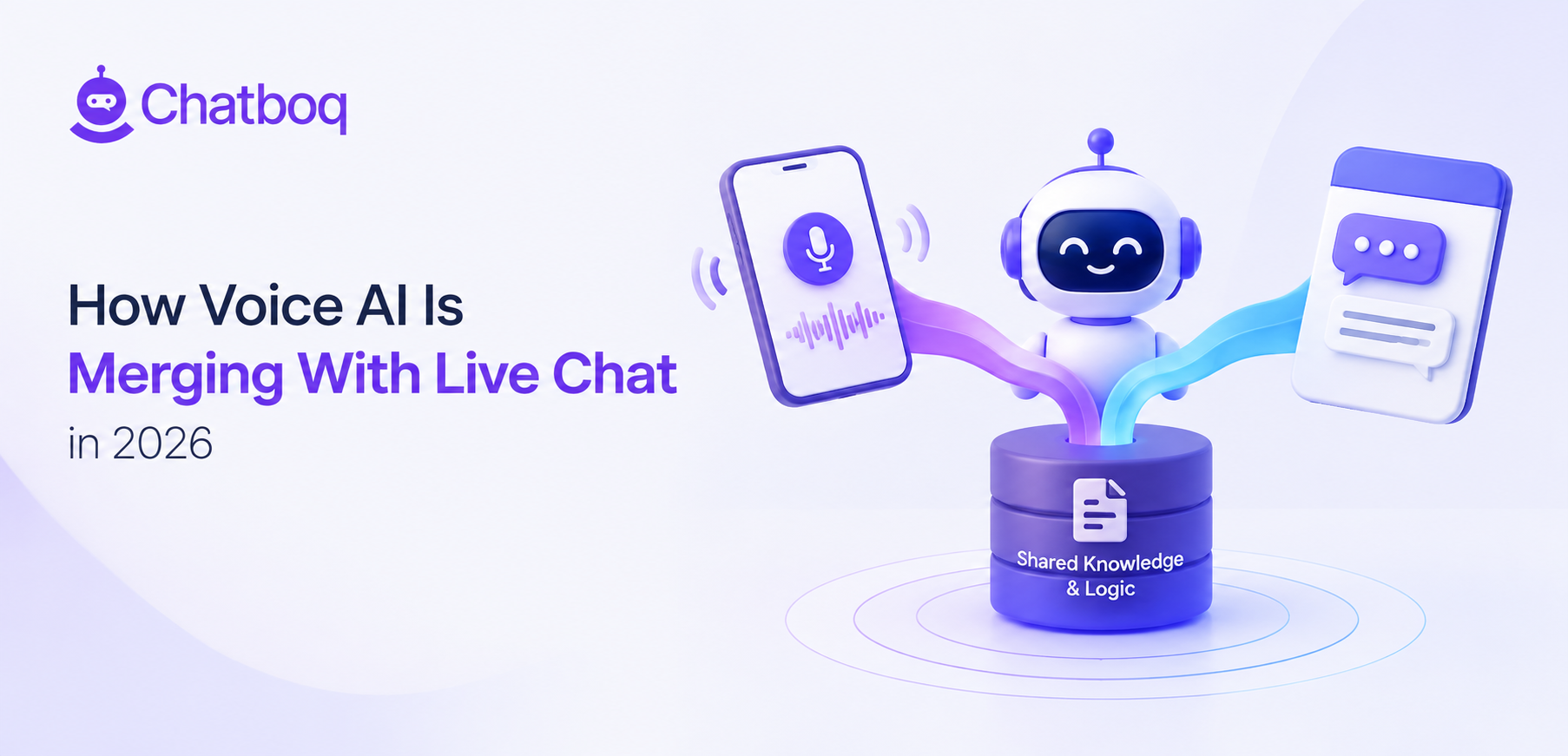
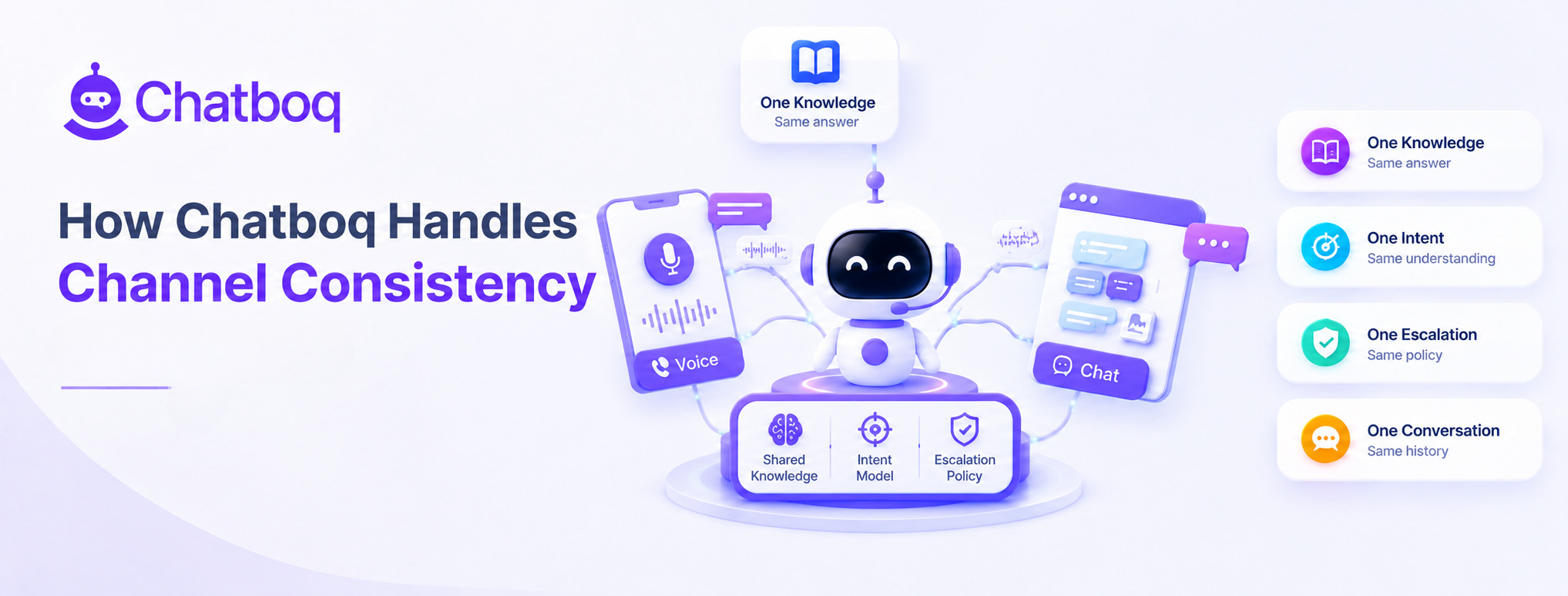
Knowledge, intent understanding, escalation rules and the conversation record can all be shared across both channels.
One knowledge source
The answer to a question does not change because it was asked aloud, which makes maintaining separate voice and chat content pure duplication.
It also guarantees inconsistency, since two sources maintained in parallel diverge regardless of intent.
One intent model
What a customer wants is the same whether spoken or typed, which means the intent set and its training can serve both channels.
Spoken phrasing differs from written and this is a training data question rather than a reason for separate models.
One escalation policy
The topics that must reach a person do not vary by channel, and maintaining two lists produces the situation where voice handles something chat escalates.
This is a compliance risk as much as an inconsistency, and consolidating removes it.
One conversation record
A customer who called yesterday and messages today is one relationship, and treating the two as separate records reproduces the repetition customers most dislike.
This is the same identity resolution problem that cross-channel threading has always required.
 ChatGPT
 Perplexity
 Claude



Leave a Comment
Your email address will not be published. Required fields are marked *
By submitting, you agree to receive helpful messages from Chatboq about your request. We do not sell data.