Below are the top CometChat alternatives in 2026, structured around API flexibility, pricing control, SDK stability, and long-term scalability.
Each tool follows the same checklist so you can compare build effort, scaling cost, and known limits before you migrate.
1. Chatboq - All-in-One AI Chatbot & Live Chat Platform
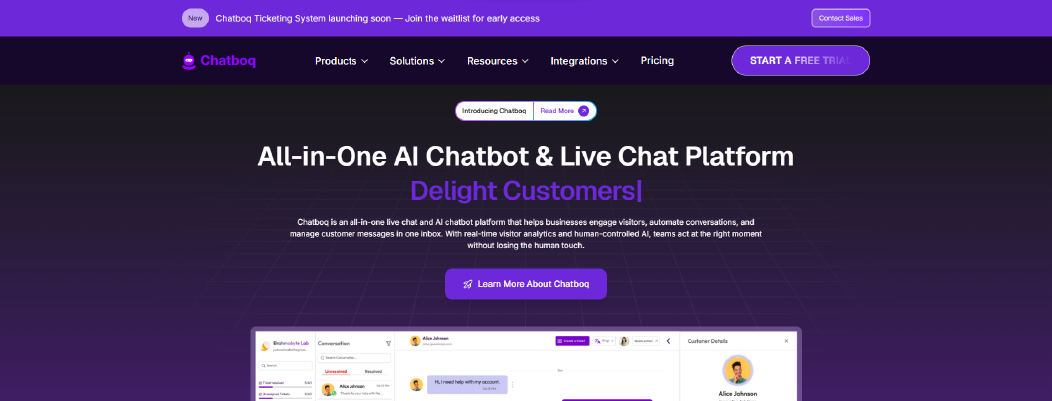
Chatboq is an all-in-one AI chatbot and live chat platform designed to manage website conversations, structured ticket workflows, and SLA tracking inside a single workspace. It combines live chat, shared inbox management, AI reply assistance, campaign triggers, and visitor tracking without requiring backend SDK integration.
It is not an in-app messaging SDK. Instead of embedding peer-to-peer chat inside apps, Chatboq focuses on managing customer conversations across websites and messaging channels. This makes it suitable for ecommerce brands, SaaS companies, agencies, support teams, and sales teams that require operational control without infrastructure complexity.
Teams that need SLA control and ticket structure can run this without enterprise-heavy setup.
Why It’s a Strong CometChat Alternative
Chatboq works well when your use case centers on website communication, ticket governance, and AI-assisted replies rather than embedded app messaging.
Chatboq uses plan-based pricing, so cost is not directly tied to MAU growth. Instead of SDK-layer customization, it provides configurable workflows inside the dashboard.
This reduces engineering workload when chat is mainly for support or sales.
Chatboq Core Strengths
-
AI-powered helpdesk with knowledge training (FAQs, documents, articles, conversation history)
-
AI reply assistant with tone adaptation based on query sentiment
-
Live chat widget with typing indicators and read receipts
-
Shared inbox with agent assignment and resolution logs
-
Built-in ticketing system with SLA policies and priority escalation
-
Custom statuses and organization-level isolation
-
Trigger-based campaigns with AND/OR logic and frequency caps
-
Visitor tracking with IP logs and country-level visibility
-
Multi-workspace management with role-based permissions
-
Email-to-ticket creation
-
Multi-channel messaging integrations (Messenger, Instagram, Slack, Telegram, WhatsApp, Discord, Line)
-
CRM integrations including Zoho CRM and Pipedrive
-
Plan-based billing with invoice and subscription control
Why is Chatboq better than CometChat
Chatboq combines SLA enforcement, ticket hierarchy, AI knowledge training, campaign triggers, and workspace-level permission control in one structured system.
CometChat provides messaging infrastructure. Chatboq gives support and sales teams more control over how conversations are handled.
If your requirement is structured website communication with workflow control and SLA visibility, Chatboq reduces reliance on SDK customization and backend management.
Limitations
-
Not designed for peer-to-peer messaging inside mobile or web apps
-
Does not offer programmable voice or video APIs
-
Not suitable for marketplace-style embedded messaging
-
AI response quality depends on structured knowledge setup
Best For
-
Ecommerce customer support teams
-
SaaS teams managing website conversations
-
Agencies handling multiple client workspaces
-
Teams that require SLA enforcement and ticket governance
-
Businesses seeking predictable subscription pricing
Pricing Snapshot
-
Plan-based subscription model
-
Workspace-level billing control
-
Card and invoice management
-
Not strictly per-agent pricing
-
No MAU-based scaling model
2. Twilio - Programmable Communication APIs Platform
Twilio is a cloud communications platform that provides programmable APIs for SMS, voice, video, email, and authentication. It allows engineering teams to build custom communication workflows directly inside web and mobile applications.
It fits teams that want full control of messaging logic at the backend layer. Twilio does not provide ready-made chat UI kits by default. Instead, it offers API-level building blocks that developers assemble into custom systems.
Why It’s a Strong CometChat Alternative
Teams usually compare Twilio on API flexibility, scale support, authentication control, and how much workflow logic they can own.
Twilio gives you programmable APIs, so routing, auth, and notifications stay under your control.
It gives more backend control, but it needs more build work than an SDK.
Twilio Core Strengths
-
Programmable SMS and messaging APIs
-
Programmable voice infrastructure
-
Video API for custom app integration
-
Authentication and verification APIs
-
Conversations API for multi-channel messaging
-
Global carrier network connectivity
-
Usage-based billing transparency
-
Enterprise-grade scalability
-
Extensive developer documentation
Why is Twilio Better Than CometChat
Twilio provides raw API infrastructure for messaging, voice, and authentication. CometChat provides structured SDKs and UI kits for in-app messaging.
Twilio allows deeper backend customization, carrier-level SMS routing, and authentication control. This reduces dependency on SDK limitations when communication is core to your product architecture.
It gives engineering teams direct ownership of the communication stack.
Limitations
-
Requires strong engineering resources
-
No prebuilt chat UI components by default
-
Higher setup complexity compared to SDK-based tools
-
Costs scale directly with usage volume
-
Longer implementation timeline
Best For
-
Engineering-led product teams
-
Fintech and SaaS platforms requiring authentication APIs
-
Apps needing global SMS and voice infrastructure
-
Products where communication logic is core architecture
-
Teams prioritizing backend control over plug-and-play messaging
Pricing Snapshot
-
Free trial period
-
SMS - Starts at $0.0083 to send or receive a message.
-
RCS - Starts at $0.0083 to send or receive a message.
-
WhatsApp Business API - Starts at $0.005 to send or receive a WhatsApp message. Prices vary by use case.
-
Conversations API - Starts at $0.05 per active user per month.
-
Voice APIs - Starts at $0.0085/min to receive and $0.014/min to make a call.
-
Twilio SendGrid Email API - Start for free with 100 emails/day. Paid plans start at $19.95/month.
-
Twilio SendGrid Marketing Campaigns - Start with a free trial with 100 emails/day. Paid plans start at $15/month.
-
Video API - Starts at $0.004/min to receive or make a video call.
-
Flex - Start with 5,000 hours free. $1/active user hour or $150/named user per month.
-
Interconnect - Starts at $0.01 per inbound caller identification request
Read more: Discover the best Twilio alternatives and compare features to choose the right helpdesk for your team.
3. Sendbird - Enterprise-Grade In-App Messaging Platform
Sendbird is an in-app messaging platform that provides chat, voice, and video APIs with ready-made UI kits for mobile and web apps. It is designed for product teams that need scalable messaging inside their applications without building infrastructure from scratch.
It fits high-volume apps that need moderation and predictable performance at scale. Sendbird supports high-volume messaging environments such as marketplaces, communities, gaming platforms, and social apps.
Why It’s a Strong CometChat Alternative
Teams compare Sendbird on scale under high traffic, moderation controls, compliance needs, and SDK stability across devices.
Sendbird adds moderation and engagement controls that help when communities get large. This makes it suitable for apps where user-to-user messaging is central to the product experience.
Its infrastructure is designed to handle large message volumes while maintaining performance stability.
Sendbird Core Strengths
-
In-app chat SDKs for iOS, Android, and web
-
Voice and video API support
-
Built-in moderation tools and content filtering
-
User blocking and reporting controls
-
Message search and chat history management
-
Push notification support
-
Enterprise compliance support (including security controls)
-
High concurrency scalability
-
Customizable UI kits
-
Advanced analytics and engagement tracking
Why is Sendbird Better Than CometChat
Sendbird provides stronger moderation tools and community management controls. For products with large active user bases, this reduces manual oversight.
Sendbird also emphasizes scalability and engagement analytics. This helps teams manage growth in social platforms, marketplaces, and community apps.
If your messaging environment involves high concurrency and active peer-to-peer communication, Sendbird offers deeper engagement and moderation layers.
Limitations
-
Pricing can increase with MAU scaling
-
Enterprise-focused pricing tiers may not suit small teams
-
Advanced features may require higher-tier plans
-
Customization may require engineering resources
-
Implementation complexity increases for large deployments
Best For
-
Marketplaces with user-to-user chat
-
Community-based platforms
-
Gaming applications
-
Social networking apps
-
Enterprise apps requiring moderation and compliance
Pricing Snapshot
-
Free trial period
-
Starter 5K - $349/month
-
Pro5K - $499/month
-
Enterprise - Custom
4. Rocket.Chat - Self-Hosted and Secure Messaging Platform
Rocket.Chat is an open-source messaging platform that supports team communication, customer chat, and secure messaging. It can be self-hosted on your own servers or deployed through managed cloud plans.
It is used when teams need hosting control and stricter data governance. Rocket.Chat is often used by enterprises, government teams, and security-focused companies that need hosting flexibility.
Why It’s a Strong CometChat Alternative
Rocket.Chat is usually compared on data ownership, hosting control, and how well it supports compliance needs.
Rocket.Chat can be self-hosted, so you keep control of where messaging data lives. This reduces dependency on third-party hosting and supports strict privacy requirements.
For teams where security policy and data residency are critical, self-hosting provides structural control.
Rocket.Chat Core Strengths
-
Open-source platform with full code access
-
Self-hosted deployment option
-
Cloud-hosted managed plans available
-
End-to-end encryption support
-
Role-based access control
-
Omnichannel messaging capabilities
-
Internal team collaboration features
-
Customizable workflows and integrations
-
Compliance-focused deployment options
-
API support for extensions and automation
Why is Rocket.Chat Better Than CometChat
Rocket.Chat offers full hosting control. CometChat operates as a managed SDK and cloud-based infrastructure service.
If your organization requires on-premise deployment, strict data governance, or internal security auditing, Rocket.Chat reduces reliance on external infrastructure.
It favors data control and compliance over managed SDK convenience.
Limitations
-
Requires infrastructure management for self-hosting
-
Setup complexity is higher than plug-and-play tools
-
UI may require customization for product-grade apps
-
Performance depends on your hosting environment
-
Advanced configuration may require DevOps resources
Best For
-
Enterprises with strict data residency policies
-
Government and regulated industries
-
Security-focused organizations
-
Teams requiring self-hosted messaging
-
Internal collaboration environments
Pricing Snapshot
Discover the top-rated RocketChat Alternatives and choose the solution that maximizes your business.
5. Drift - B2B Conversational Marketing and Sales Chat Platform

Drift is a conversational marketing and sales chat platform designed for B2B websites. It helps businesses engage visitors, qualify leads, and route conversations to sales teams in real time.
It is designed for revenue teams that want pipeline outcomes from website chat. Drift focuses on website chat, AI-driven qualification flows, meeting booking, and account-based engagement.
Why It’s a Strong CometChat Alternative
Teams compare Drift on lead qualification, CRM fit, real-time routing, and how well it matches sales workflows.
Instead of embedding messaging inside mobile or web apps, Drift operates on marketing and sales websites. It is designed to convert visitors into meetings and opportunities rather than support peer-to-peer app communication.
For B2B teams where conversation is part of revenue strategy, Drift aligns messaging with pipeline outcomes.
Drift Core Strengths
-
AI-powered website chatbots for lead qualification
-
Real-time visitor engagement
-
Meeting booking integration
-
CRM integration with Salesforce and HubSpot
-
Account-based marketing support
-
Conversation routing to sales reps
-
Visitor intent identification
-
Analytics for pipeline attribution
-
Multi-channel communication support
Why is Drift Better Than CometChat
Drift is optimized for B2B website engagement and sales acceleration. CometChat is designed for in-app messaging infrastructure.
If your goal is to convert website visitors into sales conversations, Drift provides built-in qualification workflows and CRM routing logic. This reduces the need to build custom lead capture systems on top of messaging APIs.
It is built for revenue workflows, not in-app messaging architecture.
Limitations
-
Not designed for in-app peer-to-peer messaging
-
No programmable messaging SDK for product teams
-
Pricing typically aligns with B2B enterprise budgets
-
Limited use for community or marketplace chat
-
Focused on website conversations only
Best For
-
B2B SaaS companies
-
Revenue and sales teams
-
Account-based marketing teams
-
Enterprise website engagement
-
Businesses prioritizing pipeline generation
Pricing Snapshot
Examine the best Drift alternatives to find the ultimate solution for your company.
6. Bandwidth - Carrier-Direct Voice and Messaging API Platform
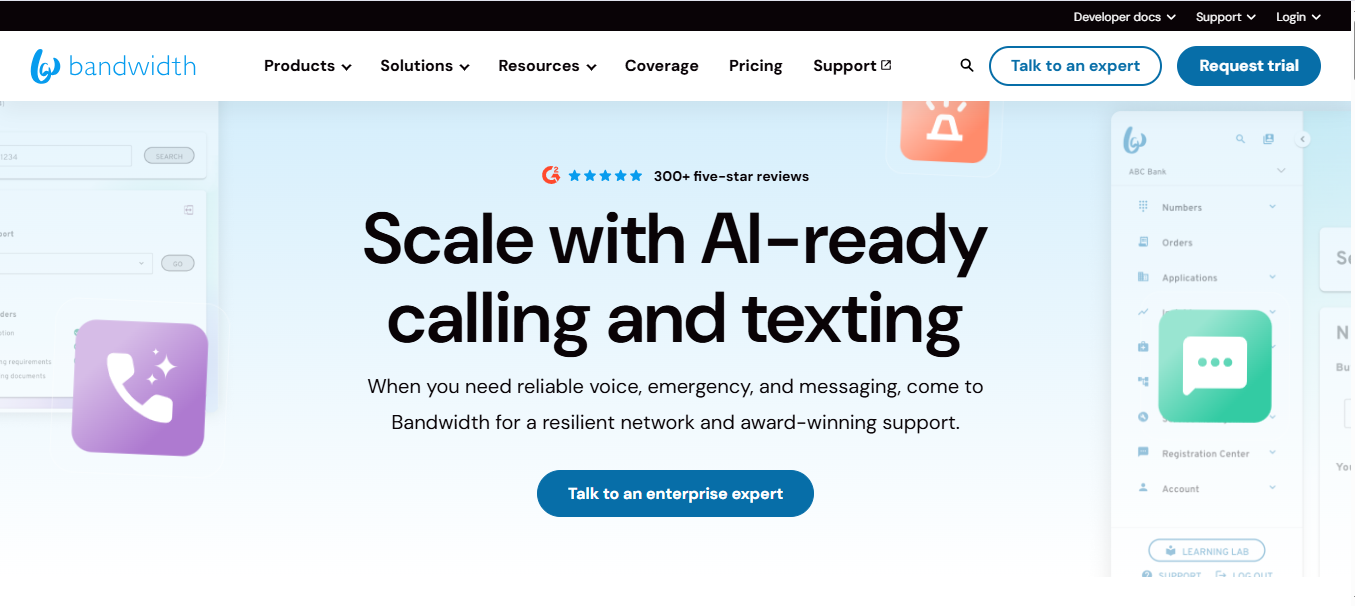
Bandwidth is a communications platform that provides direct access to voice, messaging, and emergency services APIs. It operates its own carrier network in the United States, which allows businesses to control phone numbers, SMS delivery, and voice routing without relying entirely on third-party aggregators.
Built for teams that need telecom-level control over voice and messaging infrastructure. Bandwidth focuses on programmable communications rather than ready-made chat interfaces.
Why It’s a Strong CometChat Alternative
Bandwidth addresses areas often evaluated when businesses compare CometChat alternatives, including infrastructure ownership, voice routing control, SMS reliability, and telecom-level scalability.
Instead of offering structured in-app chat SDKs, Bandwidth provides direct carrier connectivity. This gives engineering teams more control over phone number management, messaging delivery paths, and voice infrastructure.
For products where SMS or voice is core to authentication, alerts, or user communication, carrier-level control reduces dependency on layered resellers.
Bandwidth Core Strengths
-
Direct-to-carrier SMS and MMS APIs
-
Programmable voice calling APIs
-
Phone number provisioning and management
-
Emergency services (E911) support
-
High-delivery reliability for SMS traffic
-
Scalable infrastructure for large message volumes
-
Detailed usage monitoring and reporting
-
API-based workflow customization
-
Enterprise-grade compliance and security controls
Why is Bandwidth Better Than CometChat
Bandwidth focuses on telecom infrastructure. CometChat focuses on in-app chat and messaging SDKs.
If your product relies heavily on SMS verification, transactional messaging, or voice-based communication, Bandwidth provides deeper control over routing and number ownership.
It is built for SMS and voice control, not in-app chat UI.
Limitations
-
No prebuilt in-app chat UI kits
-
Not designed for peer-to-peer app messaging
-
Requires engineering resources for integration
-
Limited built-in moderation or engagement tools
-
Primarily focused on U.S. carrier infrastructure
Best For
-
Apps requiring SMS-based authentication
-
Fintech or SaaS platforms needing voice APIs
-
Businesses managing large SMS traffic volumes
-
Products requiring phone number ownership control
-
Engineering teams building communication systems from APIs
Pricing Snapshot
-
Usage-based pricing for SMS and voice
-
Charges per message, minute, and number provisioning
-
No flat subscription chat model
-
Enterprise agreements for high-volume usage
-
Costs scale directly with traffic volume
7. Plivo - Cloud Communications API Platform
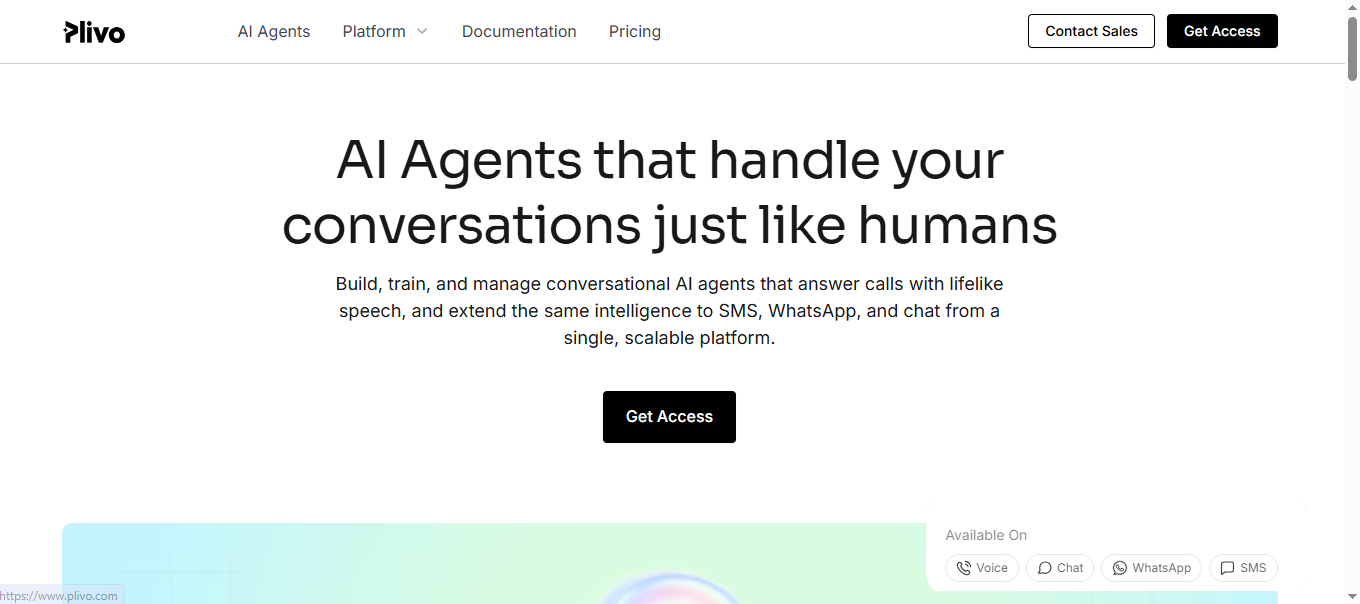
Plivo is a cloud communications platform that provides APIs for SMS, voice calls, and phone number management. It allows developers to build messaging and calling features directly into web and mobile applications.
Built for teams that need programmable communication without managing telecom infrastructure directly. Plivo focuses on reliability, cost control, and simplified API integration for messaging and voice use cases.
Why It’s a Strong CometChat Alternative
Plivo is often compared on SMS cost control, API flexibility, and delivery reliability.
Instead of offering in-app chat SDKs with UI kits, Plivo provides backend APIs for SMS and voice. This makes it suitable when messaging is transactional, such as verification codes, alerts, or notifications, rather than peer-to-peer in-app chat.
For teams looking to reduce SMS costs or manage authentication flows, Plivo offers a streamlined infrastructure layer.
Plivo Core Strengths
-
SMS and MMS APIs for global messaging
-
Programmable voice call APIs
-
Phone number provisioning and management
-
Two-factor authentication support
-
Delivery reporting and analytics
-
Competitive per-message pricing in many regions
-
Simple REST API integration
-
Scalable infrastructure for growing traffic
-
Developer-focused documentation
Why is Plivo Better Than CometChat
Plivo focuses on SMS and voice infrastructure. CometChat focuses on in-app chat and messaging SDKs.
If your communication model centers on transactional messaging, OTP verification, or automated alerts, Plivo provides direct API control without embedding chat interfaces.
This structure prioritizes backend messaging reliability and cost efficiency over app-based conversation features.
Limitations
-
No in-app peer-to-peer messaging SDK
-
No prebuilt UI chat components
-
Requires development resources for integration
-
Limited moderation or engagement tools
-
Primarily suited for SMS and voice, not social-style messaging
Best For
-
SaaS platforms needing OTP verification
-
Apps requiring SMS notifications
-
Fintech and authentication-heavy products
-
Businesses seeking cost-focused SMS APIs
-
Engineering teams building communication features at the API level
Pricing Snapshot
-
Usage-based pricing for SMS and voice
-
Charges per message, call minute, and phone number
-
No flat subscription chat model
-
Volume discounts available
-
Costs scale with communication traffic
8. Qualified - AI Pipeline Acceleration Platform for B2B Websites
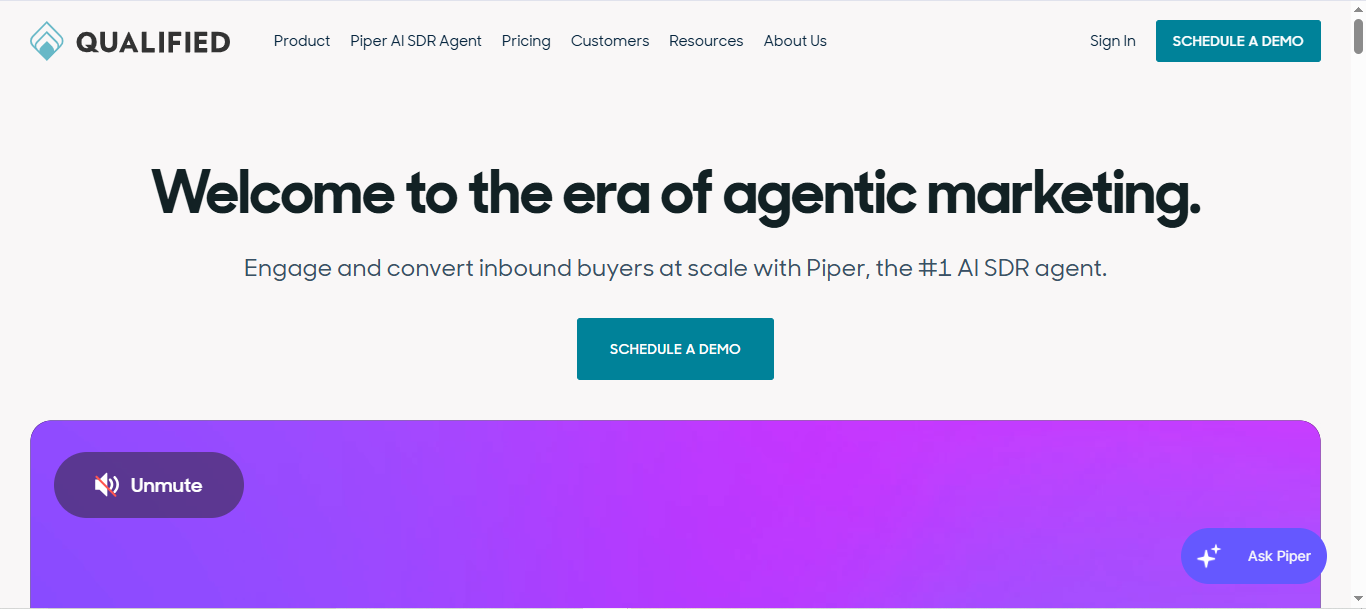
Qualified is a conversational marketing platform built for B2B revenue teams. It helps companies identify high-intent website visitors, qualify accounts in real time, and route conversations directly to sales representatives.
Built for Salesforce-driven organizations that want to turn website traffic into pipeline faster. Qualified focuses on live chat, AI-driven visitor identification, and account-based engagement rather than in-app messaging.
Why It’s a Strong CometChat Alternative
Qualified addresses areas businesses evaluate when comparing alternatives, including visitor routing, CRM-native workflows, lead qualification, and revenue attribution.
Instead of embedding peer-to-peer chat inside applications, Qualified operates at the website level. It identifies companies visiting your site, prioritizes target accounts, and connects visitors to the correct sales rep automatically.
For B2B teams where conversations drive revenue, this structure aligns messaging directly with CRM data and pipeline tracking.
Qualified Core Strengths
-
Real-time website visitor identification
-
AI-driven lead qualification flows
-
Salesforce-native integration
-
Account-based routing logic
-
Live chat with rep handoff
-
Meeting booking inside chat
-
Pipeline attribution reporting
-
Conversation intelligence insights
-
Sales-focused analytics dashboards Software
Why is Qualified Better Than CometChat
Qualified is optimized for B2B revenue operations. CometChat is designed for in-app messaging infrastructure.
If your primary objective is converting high-intent website visitors into sales meetings, Qualified provides built-in CRM routing and account prioritization logic.
It is built for website pipeline and CRM routing, not in-app messaging features.
Limitations
-
Not designed for in-app peer-to-peer messaging
-
Strongly tied to Salesforce ecosystem
-
Enterprise-focused pricing
-
Limited use for community or marketplace chat
-
Primarily website-focused deployment
Best For
-
B2B SaaS companies
-
Enterprise sales teams
-
Account-based marketing teams
-
Salesforce-native organizations
-
Revenue operations teams prioritizing pipeline generation
Pricing Snapshot
-
Enterprise subscription pricing
-
Custom contract-based agreements
-
Not MAU-based
-
Pricing aligned with revenue team size
-
Scales with enterprise usage and contract structure
9. TalkJS - Front-End Messaging UI Toolkit for Apps
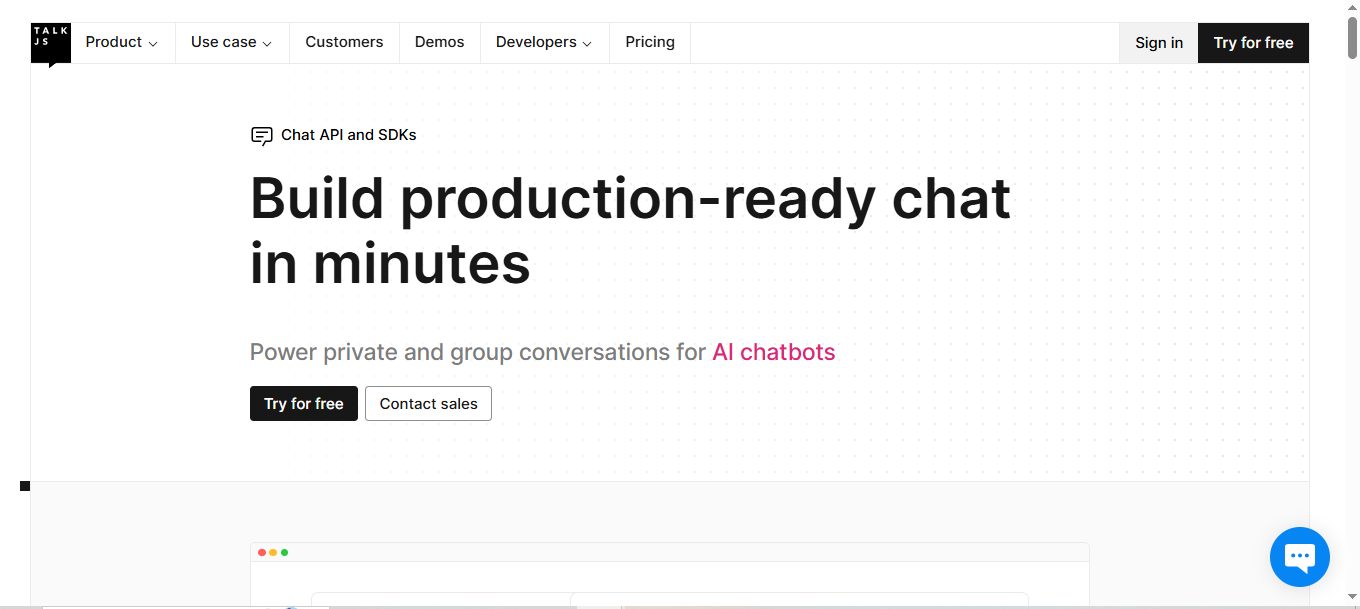
TalkJS is a chat UI toolkit that helps developers add messaging interfaces to web and mobile applications. It focuses on the front-end layer of chat, providing ready-made chat components that connect to your backend.
Built for product teams that want to launch in-app messaging quickly without designing chat UI from scratch. TalkJS handles the chat interface and user experience while allowing developers to connect it to their own data models and server logic.
Why It’s a Strong CometChat Alternative
TalkJS addresses areas often evaluated when businesses compare CometChat alternatives, including UI customization speed, frontend simplicity, and faster implementation cycles.
Instead of offering a full backend messaging infrastructure with voice and video layers, TalkJS specializes in the presentation layer. This makes it useful when your backend already manages messaging logic and you only need a polished chat interface.
For teams that want faster UI deployment without managing SDK-heavy systems, TalkJS reduces design and frontend development effort.
TalkJS Core Strengths
-
Prebuilt chat UI components for web and mobile
-
Customizable chat themes and layouts
-
Support for one-on-one and group conversations
-
Role-based chat visibility control
-
Message history and real-time updates
-
REST API and webhook support
-
Frontend-focused integration model
-
Lightweight SDK footprint
-
Developer-friendly documentation
Why is TalkJS Better Than CometChat
TalkJS prioritizes frontend simplicity. CometChat provides a more complete backend messaging infrastructure.
If your application already manages user authentication and messaging logic, TalkJS allows you to integrate a chat interface quickly without replacing your backend architecture.
This structure prioritizes UI speed and frontend flexibility over infrastructure-level messaging control.
Limitations
-
Does not provide full backend messaging infrastructure
-
No built-in voice or video APIs
-
Requires backend system for data handling
-
Limited advanced moderation compared to enterprise platforms
-
Not focused on telecom-level messaging
Best For
-
Marketplaces needing user-to-user messaging UI
-
SaaS apps adding basic in-app chat
-
Teams with existing backend messaging logic
-
Product teams prioritizing frontend speed
-
Startups wanting quick chat deployment
Pricing Snapshot
-
Basic - $279 / month
-
Growth - $569 / month
-
Enterprise - Custom
10. Crisp - Multichannel Customer Messaging Platform
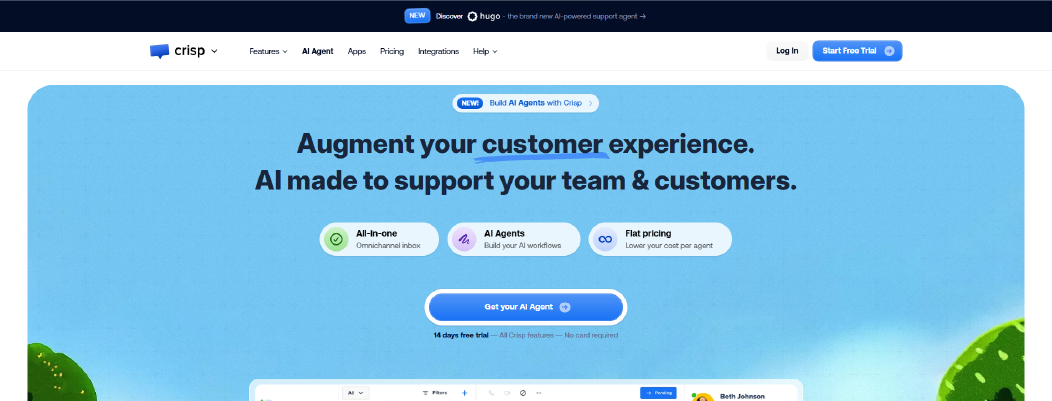
Crisp is a multichannel messaging platform that combines live chat, shared inbox, chatbot automation, and customer engagement tools in one workspace. It supports website chat and integrations with social messaging platforms.
Built for small to mid-sized teams that need simple customer communication without heavy infrastructure setup. Crisp focuses on ease of use, flat pricing tiers, and multichannel visibility.
Why It’s a Strong CometChat Alternative
Crisp is usually compared on pricing simplicity, channel coverage, basic automation, and shared inbox workflow.
Instead of embedding messaging SDKs inside mobile apps, Crisp operates primarily as a website-based communication tool. It combines live chat, automation flows, and messaging integrations inside one dashboard.
For businesses that do not require in-app peer-to-peer messaging but need structured customer conversations, Crisp reduces technical setup effort.
Crisp Core Strengths
-
Website live chat widget
-
Shared inbox for team collaboration
-
Chatbot automation workflows
-
Multi-channel messaging (Messenger, Instagram, WhatsApp, email)
-
Knowledge base integration
-
Visitor tracking and session history
-
Basic CRM features
-
Flat workspace pricing on higher tiers
-
Mobile apps for agents
-
Analytics and conversation reporting
Why is Crisp Better Than CometChat
Crisp focuses on website communication and multichannel support workflows. CometChat focuses on in-app messaging infrastructure.
If your requirement is managing customer conversations across websites and social channels rather than embedding chat inside your app, Crisp provides a simpler operational model.
It is built for team inbox work across channels, not SDK-based app messaging.
Limitations
-
Not designed for in-app peer-to-peer messaging
-
No programmable voice or video APIs
-
Limited infrastructure-level customization
-
Automation depth is lighter than enterprise platforms
-
Not suited for marketplace-style messaging apps
Best For
-
SMB customer support teams
-
Ecommerce businesses
-
Agencies managing client conversations
-
Businesses needing multichannel inbox visibility
-
Teams seeking simpler chat deployment
Pricing Snapshot
-
Free trial period
-
Mini - $45 Per month, per workspace
-
Essentials - $95 Per month, per workspace
-
Plus - $295 Per month, per workspace
Top CometChat Competitors in 2026 (Quick Comparison)
Below is a compressed comparison focused on setup effort, workflow control, integration depth, and billing structure. The goal is decision clarity, not feature overload.
|
Tool
|
Setup Complexity
|
Custom Workflow Control
|
Native Ecommerce Integrations
|
AI Training Control
|
Knowledge Base Integration
|
Reporting Depth
|
Seat / Usage Billing Impact
|
|
Chatboq
|
Low
|
Structured workflow + SLA logic
|
Yes (CRM + messaging integrations)
|
Yes (document + FAQ training)
|
Yes
|
Operational + SLA reporting
|
Plan-based (not MAU)
|
|
Twilio
|
High
|
Full API-level control
|
No native ecommerce layer
|
No native AI knowledge training
|
No
|
Usage analytics
|
Pure usage-based
|
|
Sendbird
|
Moderate
|
SDK-based customization
|
Limited native ecommerce
|
Limited AI moderation
|
Basic
|
Engagement analytics
|
MAU-based scaling
|
|
Rocket.Chat
|
High (self-hosted)
|
Customizable with server control
|
Limited
|
No built-in AI training
|
Limited
|
Basic reporting
|
Hosting + tiered plans
|
|
Drift
|
Moderate
|
Sales workflow automation
|
CRM-focused
|
AI qualification flows
|
No traditional KB layer
|
Revenue analytics
|
Enterprise contract
|
|
Bandwidth
|
High
|
API-level telecom control
|
No
|
No
|
No
|
Usage monitoring
|
Usage-based
|
|
Plivo
|
Moderate-High
|
API customization
|
No
|
No
|
No
|
Delivery analytics
|
Usage-based
|
|
Qualified
|
Moderate
|
CRM-native routing logic
|
Salesforce-focused
|
AI-driven qualification
|
Limited
|
Pipeline attribution
|
Enterprise contract
|
|
TalkJS
|
Low-Moderate
|
Front-end customization only
|
No
|
No
|
No
|
Basic usage metrics
|
Tiered + usage
|
|
Crisp
|
Low
|
Automation workflows
|
Basic ecommerce support
|
Basic chatbot flows
|
Yes
|
Conversation reporting
|
Tiered flat plans
|

 ChatGPT
 Perplexity
 Claude




Leave a Comment
Your email address will not be published. Required fields are marked *
By submitting, you agree to receive helpful messages from Chatboq about your request. We do not sell data.