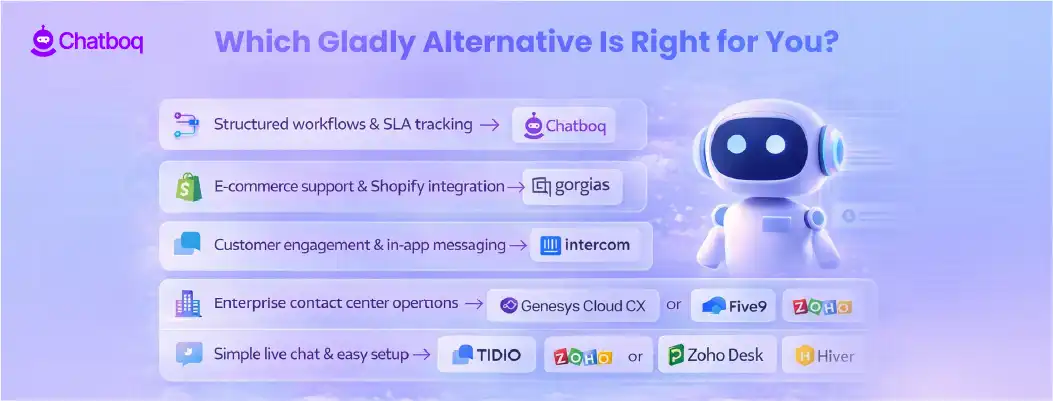
Here’s a detailed overview of the top Gladly alternatives. Each platform is evaluated using the same framework, allowing you to compare workflow configuration, AI-assisted automation, multi-channel reliability, onboarding simplicity, reporting capabilities, and pricing transparency.
This guide is intended to help you determine which Gladly replacement tool aligns with your operational requirements, supports consistent customer interactions across channels, and reduces setup complexity for teams of all sizes.
Next, we’ll review each alternative in detail to see how they handle workflow automation, multi-channel communication, and scalable support for SMBs and enterprise customer service teams.
1. Chatboq - All-in-One AI Chatbot & Live Chat Platform
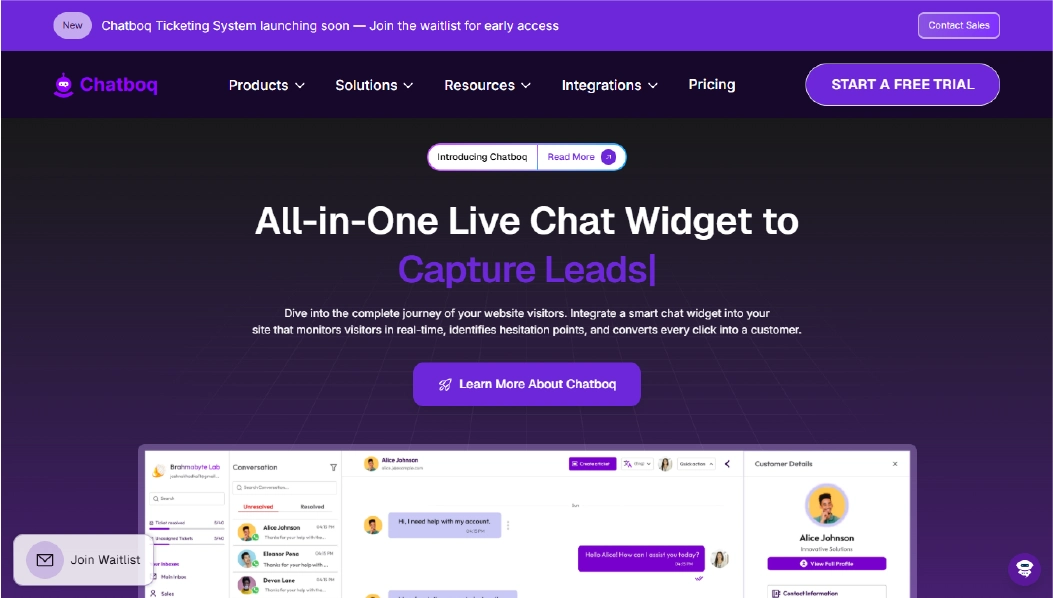
Chatboq is a platform that helps customer support teams handle every conversation in one place. Whether it’s live chat on your website, messages from social platforms, or emails from customers, agents can manage everything from a single dashboard. Workspaces keep tickets, priorities, and SLAs organized by team or client, so nothing falls through the cracks. It’s designed to help support teams track progress, assign tasks, and maintain consistent communication across channels without confusion.
Why It’s a Strong Gladly Alternative
Teams choose Gladly alternatives like Chatboq when they need structured ticket workflows, automated SLA tracking, and consistent multi-channel messaging without complex setup. While Gladly offers ease of use and customer-centric workflows, some teams experience limits with multi-channel management or complex automation.
Chatboq simplifies these processes by automatically prioritizing tickets, enforcing SLA rules per workspace, and connecting related tickets to prevent duplicates. Agents can focus on responding to customers while maintaining visibility across all conversations.
Chatboq Core Strengths
-
AI-powered suggestions from FAQs, chat history, and knowledge base articles
-
Live chat with typing indicators, message status, and multimedia support
-
Automatic email-to-ticket conversion for centralized tracking
-
Visual ticket priorities and custom statuses per workspace
-
SLA rules with defined response and resolution times
-
Ticket logs with version history and soft-delete capability
-
Parent-child linking for related or follow-up tickets
-
Manual and admin-controlled ticket assignments
-
Workspace isolation to manage multiple clients or departments
-
Role-based access with team-specific permissions
-
Visitor information including location and IP tracking
-
Messaging integrations: WhatsApp, Messenger, Instagram, Slack, Telegram, Line, Discord
-
CRM integrations: Zoho CRM, PipeDrive
-
Plan-based subscription with invoices and payment card support
Why Chatboq Is Better Than Gladly
Chatboq emphasizes structured workflows, SLA tracking, and workspace isolation, giving teams clear visibility over conversation history and response timelines. While Gladly is easy to use, Chatboq reduces the need for technical support when managing multiple channels or enforcing SLA rules.
Automation of ticket prioritization, stage transitions, and SLA alerts helps teams handle more conversations efficiently, reduce response times, and maintain organized customer interactions without relying on developers.
Limitations
-
Does not provide full IT service management capabilities
-
AI assistance is focused on FAQs and routine queries
-
No self-hosted deployment option
Best For
-
E-commerce teams managing multiple stores
-
SaaS companies monitoring SLAs and response times
-
Agencies handling client-specific workspaces
-
Support teams needing consistent multi-channel tracking
-
Small to medium-sized teams wanting clear ticket lifecycle management
Pricing Snapshot
-
Plan-based subscription
-
Workspace-level billing with usage-based scaling
-
Supports invoices and card payments
-
Not limited to per-agent pricing
-
Scales with organization size and workflow complexity
2. Salesforce Service Cloud - Enterprise-Grade CRM & Support
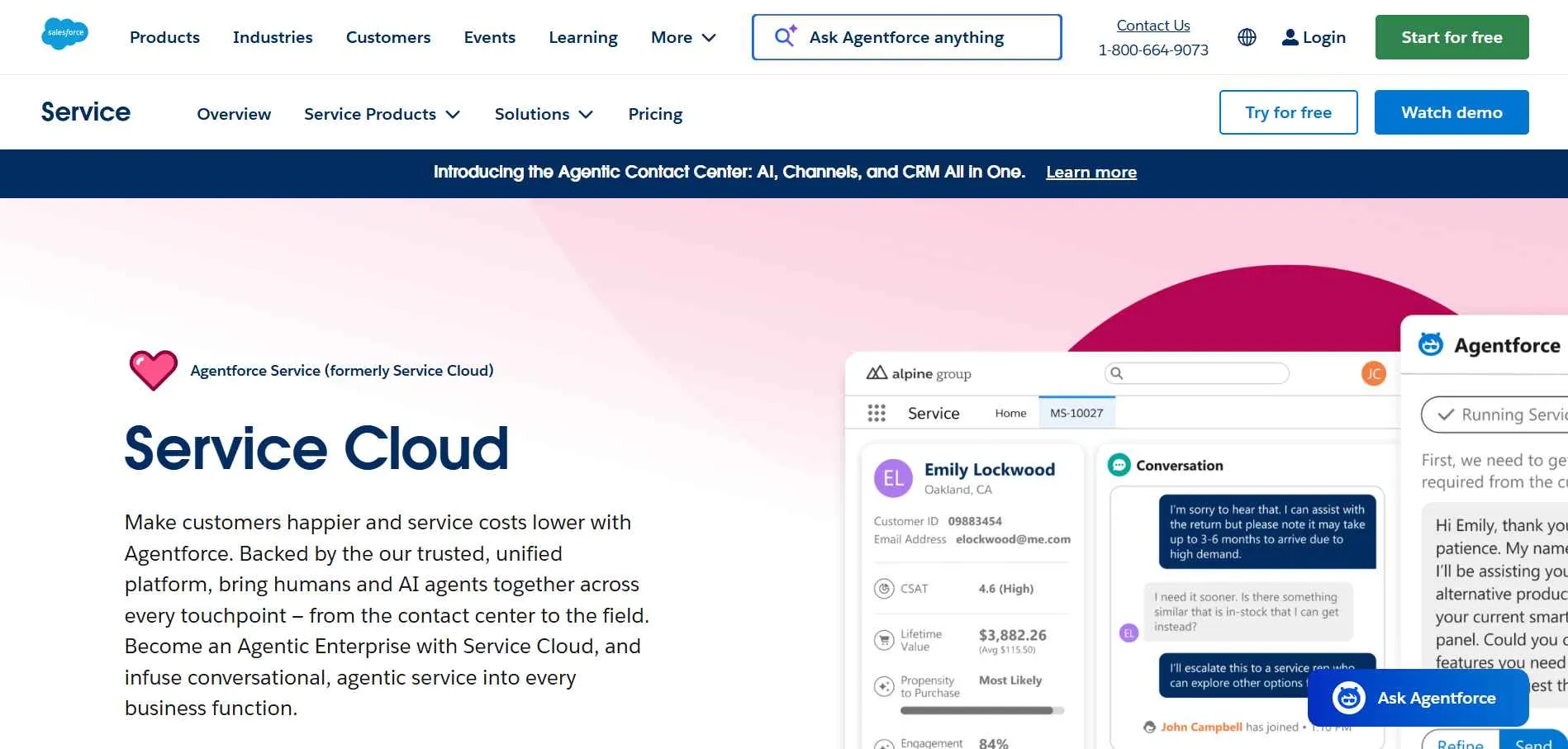
Salesforce Service Cloud helps support teams manage customer interactions at scale. It combines case management, AI-powered automation, and omnichannel communication into a single platform. Agents can track cases across email, chat, social media, and phone while using AI suggestions to speed up responses. Workflows and approvals can be customized per team or department, making it easier for large organizations to maintain consistency and compliance.
Why It’s a Strong Gladly Alternative
Many teams explore Gladly alternatives like Salesforce Service Cloud when they need deeper reporting, enterprise-grade integrations, or advanced automation. While Gladly is straightforward for smaller teams, Salesforce Service Cloud supports complex customer journeys and large-scale operations with detailed tracking, AI routing, and multi-channel case management.
The platform allows teams to route cases intelligently, automate repetitive tasks, and maintain visibility into workload and performance metrics. This reduces the manual effort for agents while ensuring consistent support for every customer interaction.
Salesforce Service Cloud Core Strengths
-
Omnichannel case management across email, chat, social, and phone
-
Advanced reporting dashboards and real-time analytics
-
Knowledge base integration for agents and self-service support
-
SLA tracking and automated escalation alerts
-
Role-based access and team-specific permissions
-
Integration with Salesforce CRM, external apps, and marketing platforms
Why Salesforce Service Cloud Is Better Than Gladly
Salesforce Service Cloud provides enterprise-level features that support large teams with complex workflows. Compared to Gladly, it enables more detailed reporting, intelligent case routing, and scalable automation. Teams can manage high volumes of customer interactions without losing visibility, ensuring SLAs are met and agents have AI guidance for repetitive tasks.
Limitations
-
Can be expensive for small or mid-sized teams
-
Advanced setup and customization may require technical resources
-
Some features have a steep learning curve for new users
Best For
-
Large enterprises with high-volume customer support needs
-
Retail, finance, and healthcare organizations managing complex workflows
-
Teams requiring detailed reporting and analytics for performance tracking
-
Companies needing strong CRM integration with customer service operations
Pricing Snapshot
-
Tiered enterprise pricing
-
Subscription-based plans with add-ons for advanced features
-
Scales for enterprise teams with multiple departments
-
Offers options for premium analytics and AI add-ons
3. Zendesk - Flexible Customer Support Suite
Zendesk is a customer support platform that centralizes ticket management, live chat, and social messaging. Agents can handle all customer interactions from a single dashboard, track tickets through multiple stages, and maintain visibility on SLAs. Its automation and reporting features help teams monitor performance, prioritize cases, and improve response efficiency without switching between tools.
Why It’s a Strong Gladly Alternative
Many teams explore Gladly alternatives like Zendesk when they need structured ticketing and multi-channel support. While Gladly is praised for ease of use and efficient workflows, Zendesk offers additional flexibility for managing larger volumes of tickets and integrating with external apps. This makes it suitable for mid-market teams or growing SMBs looking to scale customer service operations.
Zendesk also provides customizable ticket statuses, workflow automation, and reporting dashboards. These features allow agents to maintain visibility into customer interactions, track progress across channels, and ensure SLA adherence. For teams seeking consistency in handling queries across chat, email, and social, Zendesk delivers practical solutions without overly complex setup.
Zendesk Core Strengths
-
Multi-channel ticket management including email, chat, and social messaging
-
AI-assisted responses for repetitive questions
-
Customizable ticket priorities and workflow stages
-
Reporting dashboards for team performance and conversation metrics
-
Marketplace integrations with CRM, e-commerce, and marketing tools
Why Zendesk Is Better Than Gladly
Zendesk provides greater flexibility for teams that need more detailed ticket workflows and integration options. Compared to Gladly, it enables mid-market and growing SMBs to automate routine tasks, track KPIs, and manage multi-channel conversations more systematically. This is particularly helpful for teams managing larger support volumes across multiple platforms.
It also allows customization of workflow stages, automated notifications, and AI-powered suggestions for common queries. While Gladly focuses on clear ticket lifecycle management, Zendesk offers an approachable balance of automation and flexibility, making it a solid choice for teams that need scalable ticketing without the complexity of enterprise platforms.
Limitations
-
Some advanced features require higher-tier plans
-
Workflow customization can become complex for larger teams
-
AI-assisted routing is limited compared to dedicated AI platforms like Chatboq
Best For
-
SMBs and mid-market teams needing structured ticketing
-
E-commerce businesses handling chat, email, and social support
-
Teams integrating customer support with CRM or external apps
-
Support teams wanting reporting and performance tracking
Pricing Snapshot
-
Tiered subscription plans
-
Optional add-ons for analytics and AI automation
-
Per-agent pricing with feature-based upgrades
-
Suitable for small to mid-size teams
Discover the top-rated Zehndesk alternatives and choose the solution that maximizes your team's efficiency.
4. Intercom - Conversational Relationship Platform
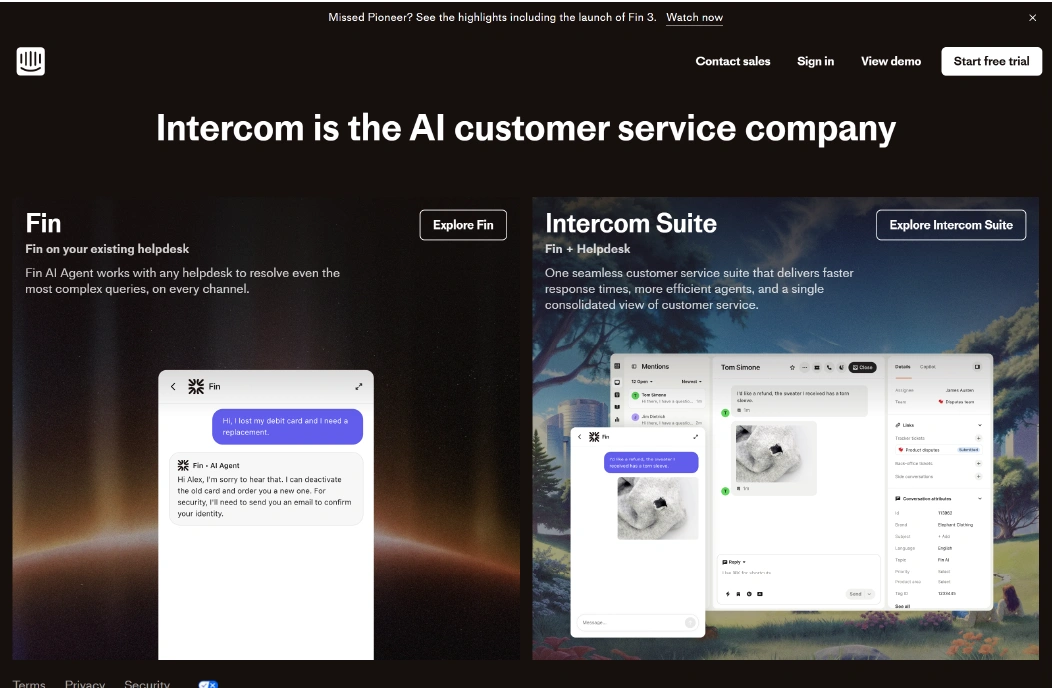
Intercom is a customer messaging platform designed to manage live chat, in-app messaging, and email interactions from one interface. Agents can handle real-time conversations, track customer behavior, and respond to queries efficiently. Its workflow automation allows teams to route messages, trigger follow-ups, and maintain visibility across multiple channels. Intercom is widely used by SaaS companies, e-commerce teams, and customer support departments that prioritize conversational engagement.
Why It’s a Strong Gladly Alternative
Teams consider Intercom when they need conversational automation alongside ticket tracking. While Gladly is known for smooth multi-channel support and efficient workflows, Intercom adds value by offering real-time customer context, message triggers, and automated routing to relevant agents. This helps teams engage users proactively rather than only reactively, improving response times and reducing manual follow-ups.
Intercom also provides reporting on conversation volume, response times, and team productivity. These insights help managers monitor performance, identify bottlenecks, and optimize workflows. For teams seeking to combine chat, email, and in-app messaging with actionable automation, Intercom provides a practical solution without excessive setup complexity.
Intercom Core Strengths
-
Live chat, in-app messaging, and email in a single dashboard
-
AI-assisted responses for common questions
-
Automated routing and message triggers
-
Team reporting and productivity dashboards
-
Integration with CRM, e-commerce, and marketing tools
Why Intercom Is Better Than Gladly
Intercom allows teams to implement automated messaging flows and track customer engagement across channels, which can complement Gladly’s multi-channel support. It supports proactive routing of conversations based on user behavior, helping teams handle large volumes of inquiries efficiently.
It also provides reporting and insights for performance monitoring, giving managers visibility into response trends and agent efficiency. While Gladly emphasizes clear ticket workflows, SLA enforcement, and workspace isolation, Intercom offers strong conversational automation for teams that need contextual messaging combined with analytics.
Limitations
-
AI automation is limited to standard responses
-
Some advanced workflow features require higher-tier plans
-
Less structured ticket lifecycle management compared to Gladly
Best For
-
SaaS companies managing in-app and email conversations
-
E-commerce teams needing real-time chat automation
-
Support teams looking for contextual engagement and performance insights
-
Mid-size teams wanting workflow triggers without complex setup
Pricing Snapshot
-
Tiered subscription plans
-
Per-seat pricing with optional add-ons for automation
-
Integrations and reporting features included in higher tiers
-
Suitable for SMBs and mid-market teams
Evaluate the most effective alternatives to Intercom and pick the one that scales with your business.
5. Gorgias - E-Commerce-Focused Helpdesk
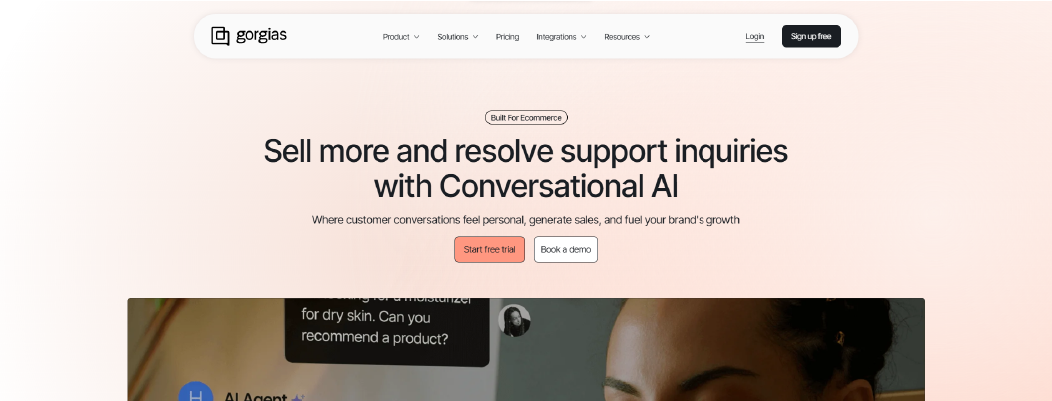
Gorgias is a helpdesk platform built for e-commerce businesses, centralizing customer interactions from email, chat, SMS, and social media in one dashboard. Agents can manage orders, handle returns, and respond to inquiries while accessing relevant customer and order data. The platform supports automated responses for common questions, tagging, and routing to ensure tickets are addressed promptly. Gorgias is commonly used by online stores seeking to streamline support workflows and reduce response times across multiple channels.
Why It’s a Strong Gladly Alternative
Teams turn to Gorgias when they need a customer service tool optimized for e-commerce. While Gladly provides multi-channel support and efficient ticket handling, Gorgias enhances operational efficiency by connecting customer orders with ticket responses. This allows agents to reply faster, reference order details instantly, and maintain consistent communication across platforms.
The platform also supports automation for repetitive tasks, such as refund processing or order status updates, reducing manual work for agents. For businesses focusing on online retail, Gorgias provides contextual messaging and order-linked ticketing, helping teams maintain high customer satisfaction while managing large volumes of requests.
Gorgias Core Strengths
-
Centralized email, chat, SMS, and social media support
-
Automation for common e-commerce questions and tasks
-
Tagging and ticket routing to organize workflows
-
Order-linked ticketing for faster agent responses
-
Integration with Shopify, Magento, and BigCommerce
Why Gorgias Is Better Than Gladly
Gorgias streamlines customer support specifically for e-commerce teams by linking tickets directly to orders and customer data. This reduces the need for manual lookups, accelerates response times, and ensures consistent messaging across channels. While Gladly provides multi-channel support and customer-centric workflows, Gorgias focuses on automating repetitive e-commerce tasks such as refunds, shipping inquiries, and order updates.
Managers can track response times, agent performance, and ticket trends in real time, helping teams optimize workflows and improve customer satisfaction. Compared to Gladly, Gorgias emphasizes order-linked ticketing and e-commerce-specific integrations, making it a practical choice for online stores that need faster and more context-aware support.
Limitations
-
Best suited for e-commerce; may not fit general B2C or enterprise support needs
-
Advanced workflow automation requires higher-tier plans
-
Limited offline or self-hosted deployment options
Best For
-
Online stores using Shopify, Magento, or BigCommerce
-
Support teams handling high volumes of order-related tickets
-
Mid-size e-commerce teams looking for automated workflows
-
Managers seeking integrated performance insights for agents
Pricing Snapshot
-
Tiered subscription plans based on ticket volume
-
Per-agent pricing with optional add-ons for automation
-
Integrations included with higher-tier plans
-
Scales for small to mid-size e-commerce teams
6. Freshdesk - Multi-Channel Support Platform
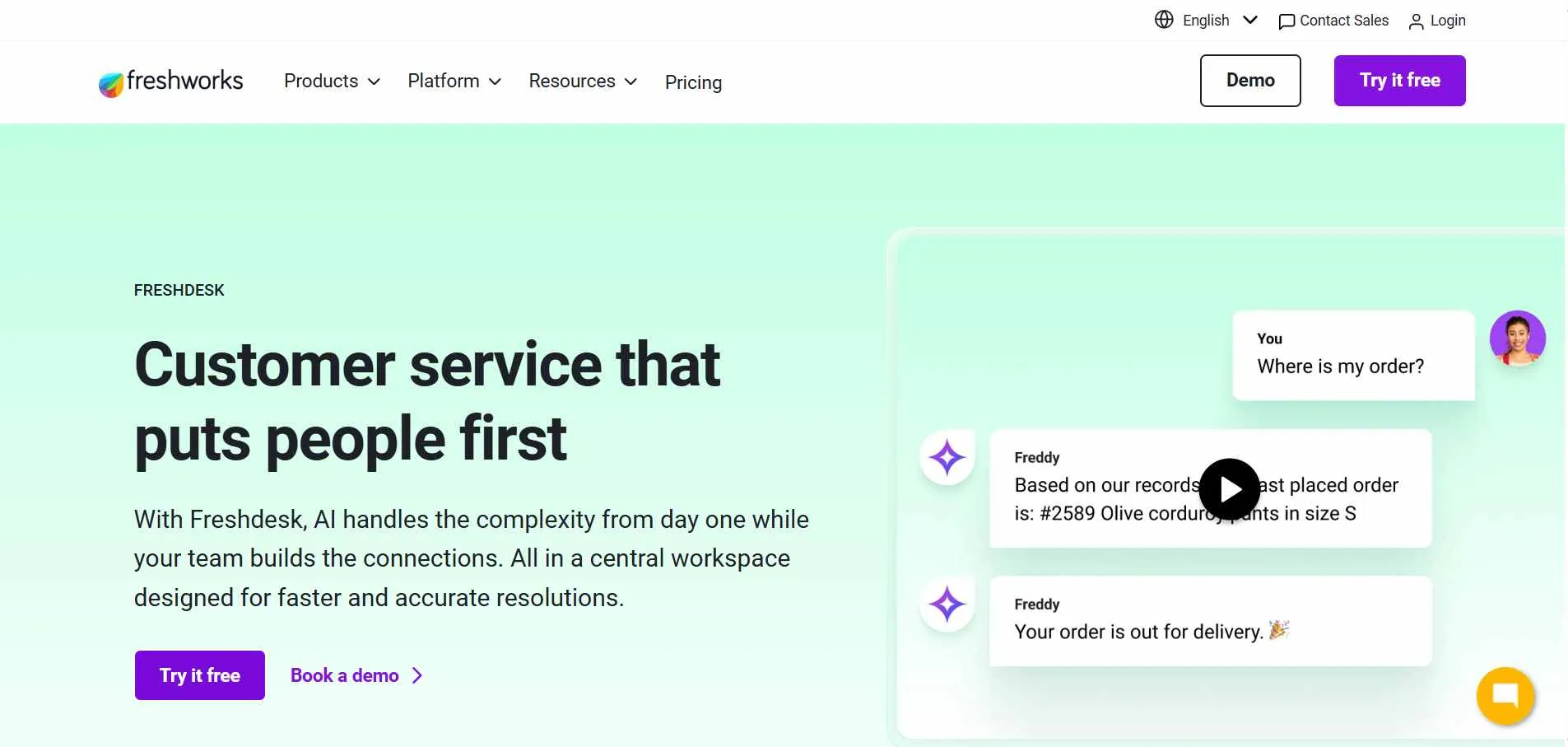
Freshdesk is a customer support platform that centralizes tickets, live chat, email, and social interactions in a single interface. Agents can prioritize tasks, assign tickets, and track SLAs across multiple channels. The platform includes workflow automation, canned responses, and reporting dashboards, helping teams handle high volumes of inquiries efficiently. Freshdesk works well for mid-size to large customer service teams looking for a structured ticketing system that supports consistent and timely responses.
Why It’s a Strong Gladly Alternative
Organizations consider Freshdesk when they need reliable multi-channel ticket management and basic workflow automation. Gladly provides strong customer-centric interactions, but Freshdesk adds value by simplifying ticket assignment, SLA monitoring, and multi-channel tracking in one platform.
The platform’s automation features reduce repetitive work by automatically routing tickets, sending reminders, and escalating overdue requests. Freshdesk also offers built-in reporting for agent performance, ticket volume trends, and SLA compliance, giving managers actionable insights to improve customer support operations.
Freshdesk Core Strengths
-
Centralized ticketing for email, chat, and social media
-
Workflow automation for repetitive tasks and ticket routing
-
SLA tracking and priority-based escalation
-
Built-in reporting dashboards for agents and managers
-
Integration with CRM, e-commerce, and messaging platforms
Why Freshdesk Is Better Than Gladly
Freshdesk provides clear workflow structures and automated routing, helping teams manage ticket volumes efficiently. While Gladly focuses on customer-centric design and multi-channel engagement, Freshdesk emphasizes structured ticket handling, SLA compliance, and reporting visibility.
Managers can monitor team performance and track ticket trends in real time, enabling faster identification of bottlenecks and process improvements. Compared to Gladly, Freshdesk may feel more structured for operational oversight, making it suitable for teams handling a higher volume of support requests with clear priorities.
Limitations
-
Advanced AI automation is limited compared to other platforms
-
Mobile app features may feel basic for some teams
-
Customization options may require higher-tier plans
Best For
-
SMBs and mid-size teams managing multi-channel support
-
Teams needing structured ticket routing and SLA tracking
-
Managers seeking actionable performance insights
-
Customer support teams handling higher ticket volumes
Pricing Snapshot
-
Tiered subscription plans with per-agent pricing
-
Automation and advanced reporting included in higher tiers
-
Supports integrations with CRM, chat, and messaging tools
-
Scales for growing teams without technical setup
Find the best-value Freshdesk alternatives and select the perfect match for your budget and needs.
7. Kustomer - Unified Customer Service CRM
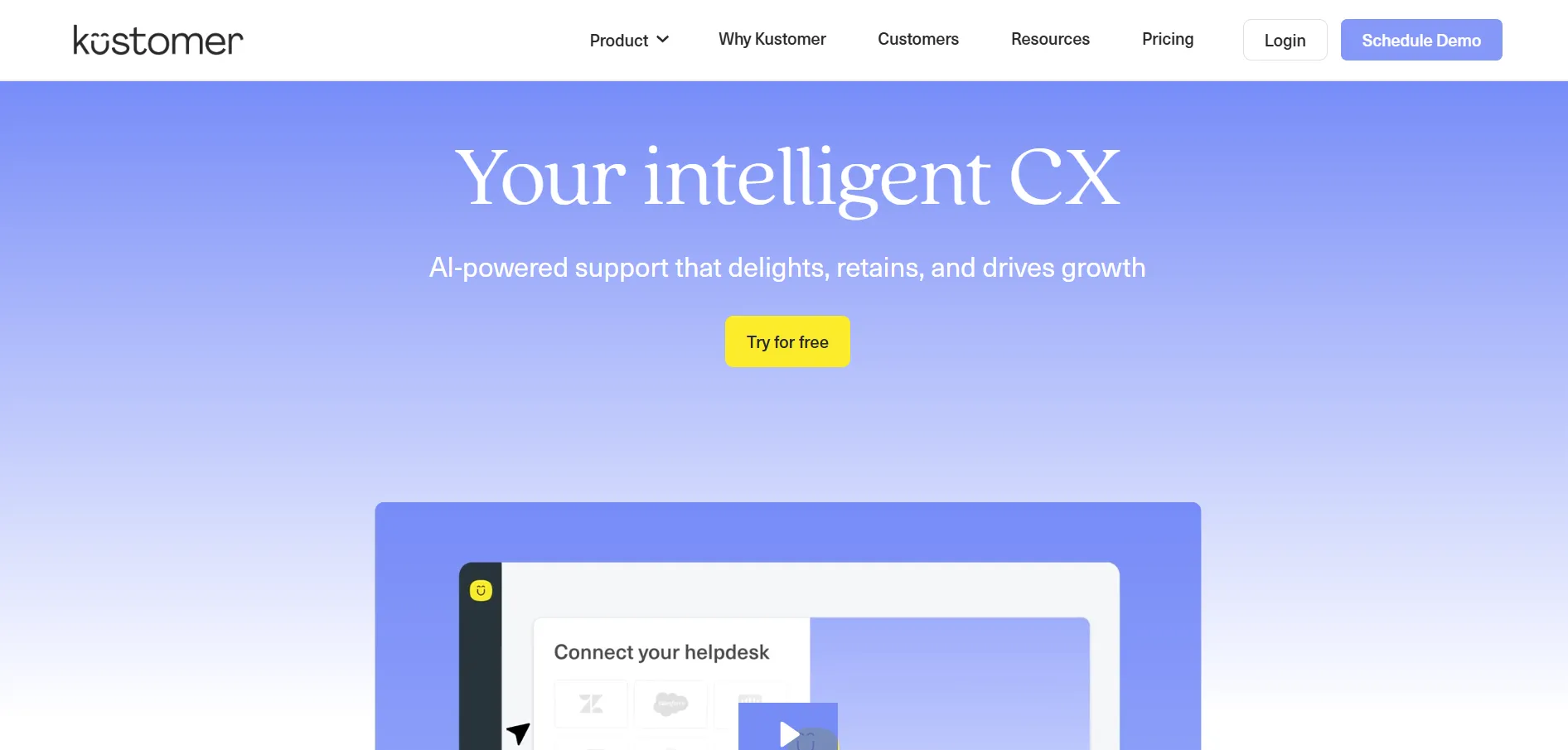
Kustomer is a CRM-focused customer support platform that centralizes conversations, customer data, and workflow automation in a single interface. It allows agents to view complete customer histories, manage tickets, and track tasks across chat, email, social, and messaging apps. Kustomer is designed for teams that need a holistic view of customers and want to combine support operations with CRM insights, helping improve response times and personalized service.
Why It’s a Strong Gladly Alternative
Teams consider Kustomer when they want unified customer profiles and CRM-linked support workflows. While Gladly offers a customer-centric interface and multi-channel interactions, Kustomer adds value by integrating detailed customer histories directly into support workflows.
The platform enables automated ticket routing based on customer context, priority, or agent skill level, reducing manual effort and response delays. Managers can monitor team performance, track SLA compliance, and analyze conversation trends to optimize operations, making Kustomer a practical choice for teams needing structured workflows with integrated customer data.
Kustomer Core Strengths
-
Unified customer profiles with conversation history and data
-
Automated ticket routing and workflow triggers
-
Multi-channel support: chat, email, social, messaging apps
-
SLA tracking and reporting dashboards for teams and managers
-
CRM integrations with Salesforce, Shopify, and other platforms
Why Kustomer Is Better Than Gladly
Kustomer centralizes customer data and tickets, allowing teams to respond with full context on past interactions. While Gladly focuses on customer experience and intuitive workflows, Kustomer emphasizes structured ticketing with integrated CRM insights, helping teams prioritize inquiries and maintain consistency.
Managers can assign tickets based on agent expertise, monitor resolution timelines, and analyze support metrics to improve operational efficiency. Compared to Gladly, Kustomer may better suit mid-size to enterprise teams that need both CRM data and customer service workflows in one platform.
Limitations
-
Advanced customization may require technical setup
-
AI-assisted automation is basic compared to dedicated AI platforms
-
Higher tiers can be costly for smaller teams
Best For
-
Mid-size to enterprise customer support teams
-
Teams needing combined CRM and support workflows
-
Managers tracking SLA compliance and team performance
-
Organizations handling multi-channel interactions with data context
Pricing Snapshot
-
Tiered subscription plans with per-agent pricing
-
CRM integration and workflow automation included
-
Supports multi-channel communication and reporting dashboards
-
Scales for growing teams with flexible plan options
Check out the top Kustomer alternatives and select the one that best suits your business.
8. Dixa - Personalized Customer Engagement Platform
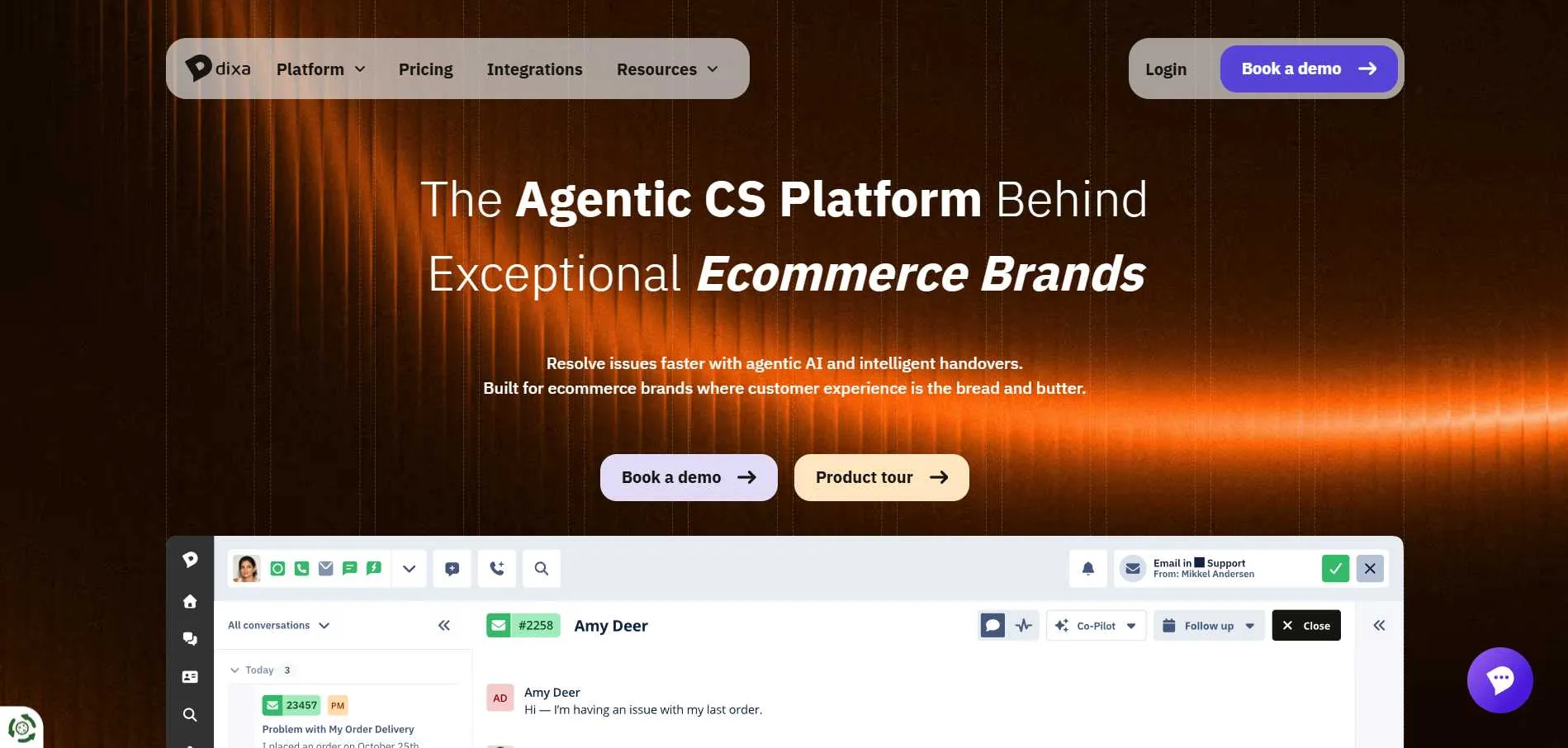
Dixa is a customer service platform designed to unify conversations across chat, email, voice, and messaging apps in a single interface. It emphasizes personalized customer engagement by letting agents see the full context of each customer interaction. Teams can manage inquiries efficiently while maintaining conversation continuity across channels. Dixa is suitable for organizations that want simple workflows but still need to handle high volumes of multi-channel support.
Why It’s a Strong Gladly Alternative
Teams consider Dixa when they need consistent multi-channel support and a platform that keeps all conversations in one place. While Gladly provides a customer-centric interface and streamlined workflows, Dixa adds value with an emphasis on personalized engagement and conversation history for every customer.
Dixa’s automation tools help route inquiries to the right agent based on priority or topic, ensuring faster responses. Its conversation tracking allows managers to monitor team performance, handle escalations efficiently, and maintain customer satisfaction levels. For businesses that prioritize responsive support with fewer configuration steps, Dixa offers a practical alternative to Gladly.
Dixa Core Strengths
-
Unified inbox for chat, email, voice, and messaging apps
-
Automated ticket routing based on priority or topic
-
Conversation history accessible to all support agents
-
Real-time monitoring and reporting dashboards
-
Simple workflows for quick adoption by teams
Why Dixa Is Better Than Gladly
Dixa provides clear conversation visibility and personalized routing that helps agents respond faster with the right context. While Gladly excels in intuitive customer-centric workflows, Dixa’s focus is on ensuring every agent has the information needed to provide consistent responses.
Its real-time monitoring and automated routing reduce manual intervention and missed messages, making it easier for mid-size teams to maintain high service quality. Compared to Gladly, Dixa may be preferable for organizations looking for straightforward adoption without extensive setup or training.
Limitations
-
Limited advanced AI features for predictive automation
-
Custom integrations may require technical support
-
Smaller knowledge base capabilities compared to some competitors
Best For
-
Mid-size teams needing multi-channel engagement
-
Support teams prioritizing personalized customer interactions
-
Managers tracking performance and conversation continuity
-
Organizations handling high-volume inquiries with minimal setup
Pricing Snapshot
-
Tiered subscription plans per agent
-
Multi-channel support included in all tiers
-
Real-time reporting and conversation tracking dashboards
-
Scales for growing teams with flexible plan options
9. Front - Shared Inbox & Team Collaboration Tool
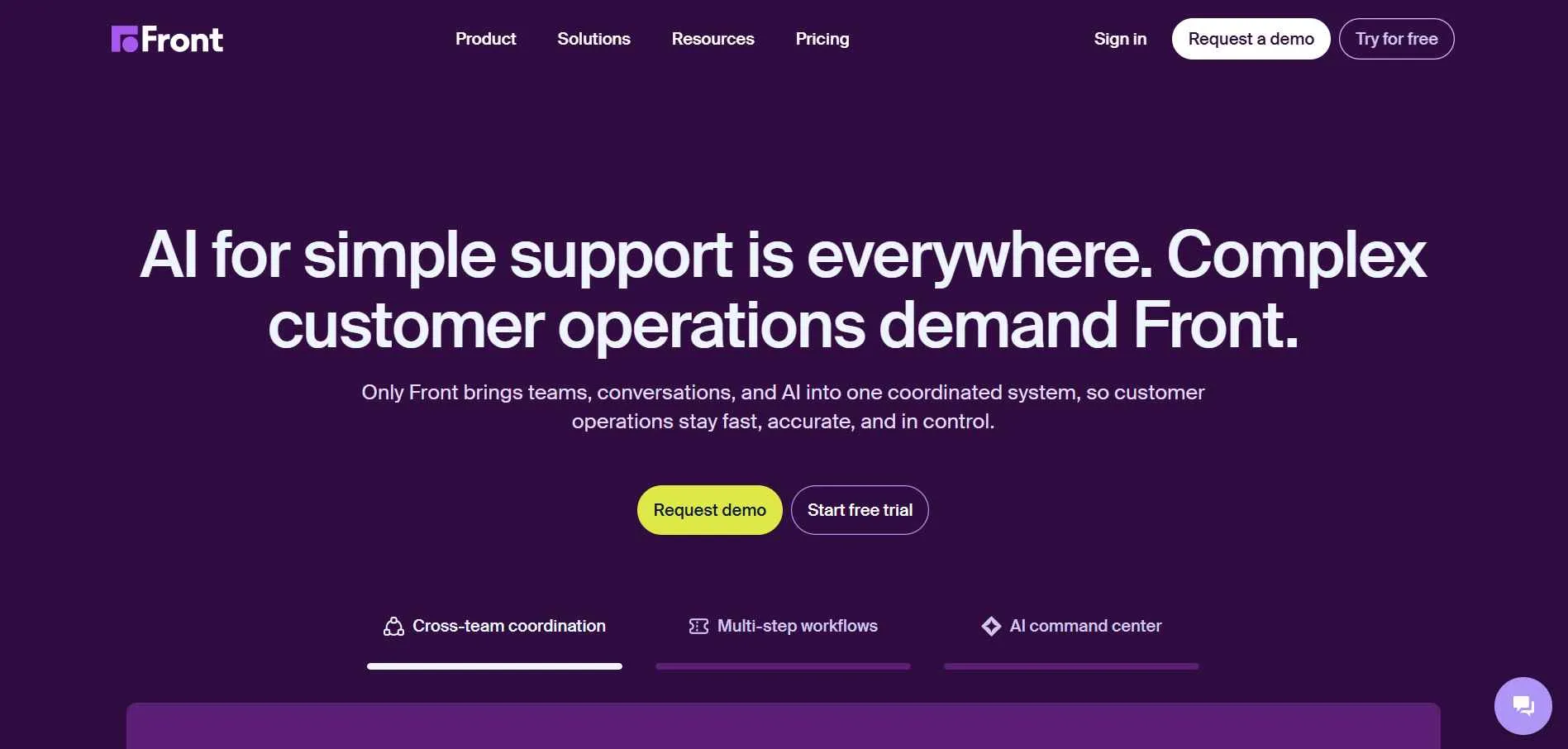
Front is a platform that centralizes emails, chat, SMS, and social messaging into a shared inbox for teams. It is designed to help customer service and support teams collaborate efficiently, ensuring no message is missed and each inquiry is assigned to the right agent. Front is ideal for teams that want clear visibility over all incoming requests while keeping conversations organized and actionable.
Why It’s a Strong Gladly Alternative
Front appeals to organizations looking for better team collaboration and accountability in handling customer interactions. While Gladly emphasizes customer-centric workflows and multi-channel support, Front’s strength lies in shared visibility and team alignment, reducing the risk of missed messages or duplicated work.
The platform allows managers to monitor response times, assign conversations to the right agents, and tag messages for follow-up. For teams that rely heavily on email and messaging as primary support channels, Front offers a straightforward approach to maintain organization without overly complex workflows.
Front Core Strengths
-
Shared inbox for email, chat, SMS, and social messaging
-
Conversation assignment and tagging for clear accountability
-
Internal notes for agent collaboration without exposing them to customers
-
Real-time monitoring of response times and team performance
-
Basic automation rules to prioritize messages and streamline workflows
Why Front Is Better Than Gladly
Front provides teams with enhanced visibility across all incoming messages, ensuring accountability and faster response management. Gladly focuses on structured workflows and SLA management, but some teams may prefer Front’s simplicity when collaboration is the priority.
The shared inbox approach reduces handoff errors and improves coordination across teams. For organizations where multiple agents handle the same inbox or channel, Front can simplify tracking and assignment without requiring advanced configuration. Compared to Gladly, Front is suitable for teams looking for clarity and coordination over automated workflow complexity.
Limitations
-
Limited AI-assisted routing and automation compared to some alternatives
-
Fewer advanced workflow customization options
-
Reporting dashboards are less detailed for large-scale operations
Best For
-
Teams managing shared email and chat support
-
Customer service groups needing strong internal collaboration
-
Managers overseeing multiple agents in one inbox
-
Organizations prioritizing response visibility and assignment tracking
Pricing Snapshot
-
Tiered subscription per user
-
Shared inbox and basic automation included in all tiers
-
Real-time monitoring and assignment features
-
Scales for teams from small to mid-size
Explore the Front alternatives and identify the best fit for your team’s workflow.
10. Genesys Cloud CX - AI-Powered Enterprise Contact Center
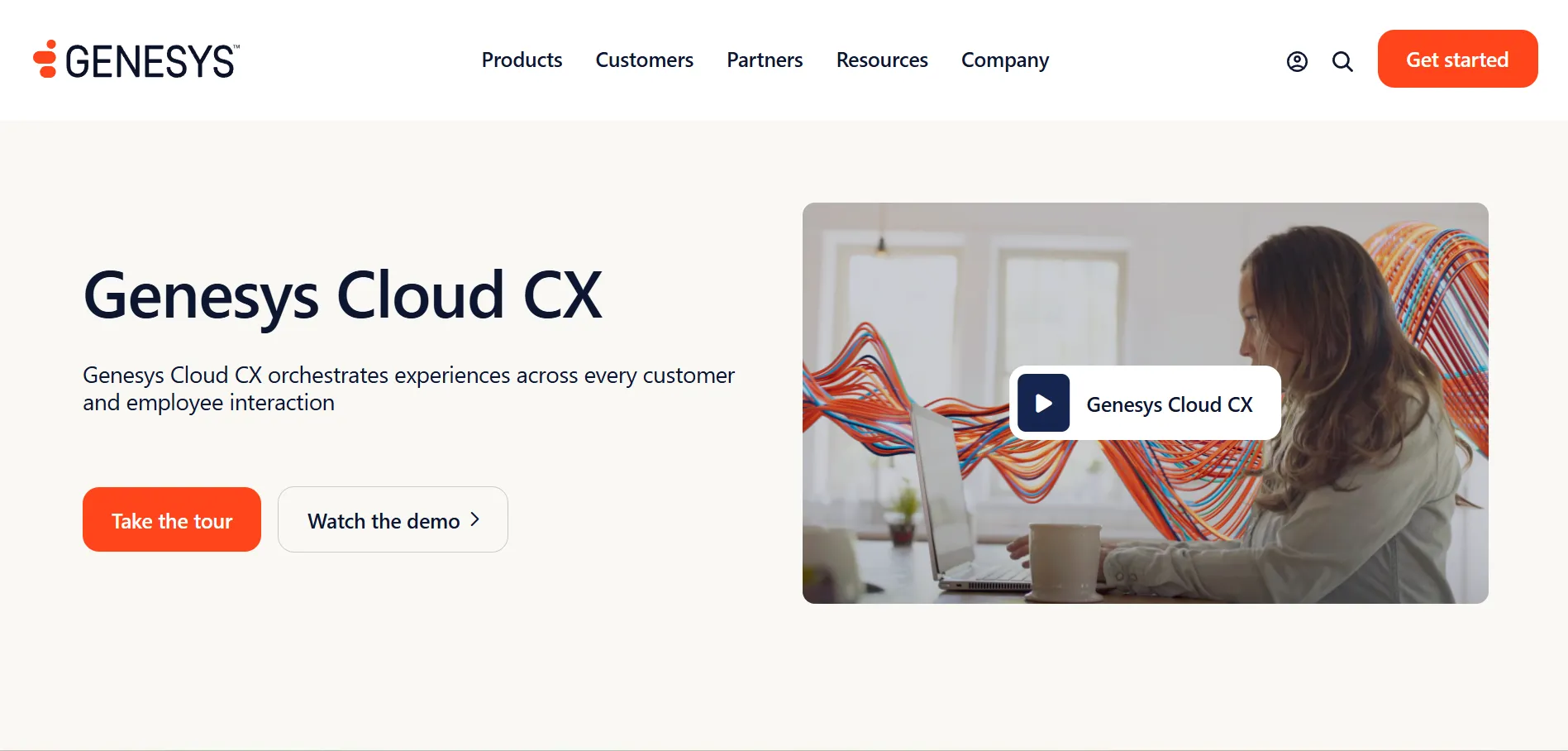
Genesys Cloud CX is a cloud contact center platform designed for enterprise customer service teams managing high volumes of interactions across multiple channels. It combines voice, chat, email, social, and messaging into a single platform, allowing teams to route inquiries intelligently and monitor performance across large support operations. The platform is suitable for organizations that require enterprise-grade scalability, advanced reporting, and AI-assisted routing for consistent customer engagement.
Why It’s a Strong Gladly Alternative
Genesys Cloud CX appeals to enterprises that need extensive channel support and AI-driven automation to manage large customer service teams. While Gladly offers streamlined workflows and ease of use, Genesys Cloud CX provides sophisticated routing options, detailed analytics, and robust reporting that can support complex operations at scale.
The platform allows for conditional routing, predictive engagement, and real-time workforce management. Teams can track SLAs, monitor performance metrics across channels, and optimize agent allocation to reduce wait times and improve customer satisfaction. For organizations with high call volumes or multi-site operations, Genesys Cloud CX offers structured tools to maintain service quality.
Genesys Cloud CX Core Strengths
-
Omnichannel support: voice, chat, email, social, messaging
-
AI-assisted routing and predictive engagement
-
Real-time dashboards and performance analytics
-
Workforce management and SLA monitoring
-
Integration with CRM systems and enterprise tools
Why Genesys Cloud CX Is Better Than Gladly
Genesys Cloud CX offers enterprise-level analytics and automation that can handle large-scale customer interactions more effectively than Gladly in certain scenarios. Gladly excels at SMB-friendly interfaces and simple workflow management, but Genesys Cloud CX provides more control over complex routing, advanced reporting, and predictive engagement for high-volume teams.
For teams managing thousands of interactions daily, Genesys Cloud CX reduces operational risks by providing detailed insights and automated routing decisions. It supports multi-site and multi-department coordination, which is essential for large enterprises that require both scale and precision.
Limitations
-
Higher learning curve compared to simpler platforms like Gladly
-
Premium pricing makes it less suitable for SMBs
-
Some features require dedicated configuration and setup
Best For
-
Large enterprises with high-volume support needs
-
Customer service teams needing AI-assisted routing
-
Organizations requiring detailed performance reporting
-
Multi-channel and multi-site support operations
Pricing Snapshot
-
Tiered enterprise plans
-
Per-agent subscription with optional add-ons
-
Includes omnichannel support and AI features
-
Designed for scalability and complex operations
Read More: Get the best Genesys Alternative in the market.
11. Five9 - Cloud Contact Center Platform
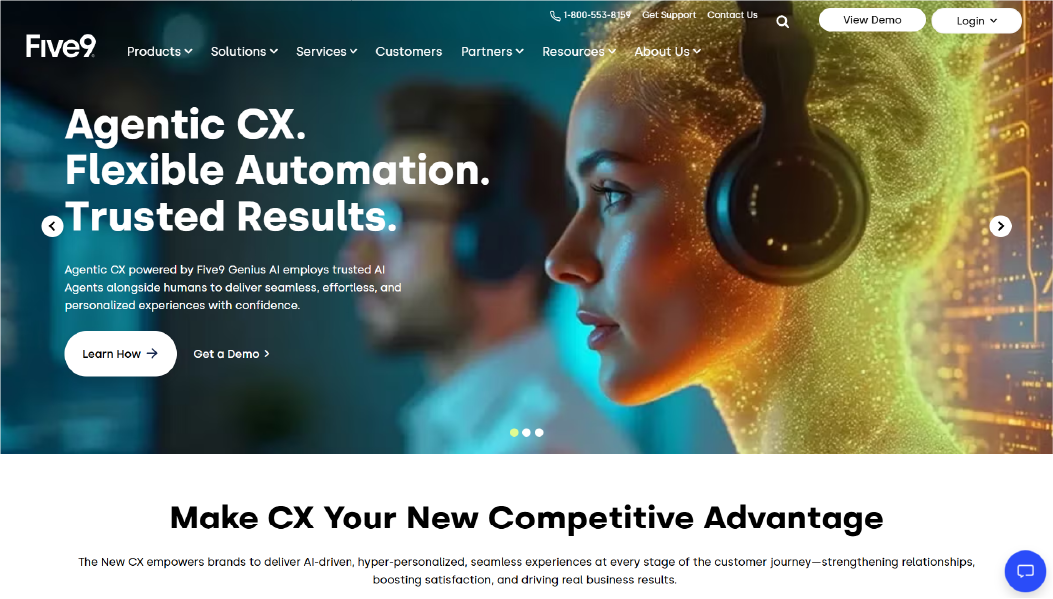
Five9 is a cloud-based contact center platform designed to help customer service teams manage high volumes of calls and digital interactions. It combines AI-driven routing, predictive dialing, and reporting dashboards to streamline workflows for sales, support, and customer success teams. Five9 is suitable for organizations that need robust automation for call management and reliable multi-channel communication.
Why It’s a Strong Gladly Alternative
Five9 is ideal for teams that prioritize efficient call handling and advanced analytics over simple ticket workflows. While Gladly focuses on ease of use, multi-channel chat, and email support, Five9 provides predictive dialing, real-time agent performance monitoring, and automated call distribution to improve efficiency in high-volume environments.
The platform supports voice, chat, and email channels, with AI tools that help route interactions based on agent skills, availability, and customer context. Teams can monitor key metrics like average handle time, service levels, and queue performance to maintain consistent customer experience. For organizations handling thousands of calls daily, Five9 provides structure and insights that reduce operational bottlenecks.
Five9 Core Strengths
-
AI-assisted call routing and predictive dialing
-
Omnichannel support: voice, chat, and email
-
Real-time dashboards and agent performance analytics
-
Workflow automation for repetitive tasks
-
Integration with CRM systems like Salesforce and Microsoft Dynamics
Why Five9 Is Better Than Gladly
Five9 provides advanced call center capabilities that support large-scale customer operations. Gladly excels at streamlined ticket workflows and simplicity, but Five9 offers predictive analytics, skill-based routing, and enterprise-grade reporting that helps teams manage high interaction volumes efficiently.
For teams managing primarily voice-based customer service or multi-channel communication at scale, Five9 reduces response delays, optimizes agent allocation, and provides metrics-driven insights for decision-making. Its automation tools complement human agents, enabling them to focus on complex inquiries while routine calls are handled effectively.
Limitations
-
Primarily focused on voice and high-volume call centers
-
Setup can be complex for teams without technical support
-
Premium pricing may not suit small businesses
Best For
-
Large contact centers with high call volumes
-
Teams needing predictive AI for call routing
-
Organizations requiring advanced analytics and reporting
-
Customer service teams balancing voice and digital channels
Pricing Snapshot
-
Subscription-based per-agent pricing
-
Tiered plans depending on channel support and features
-
Includes AI routing, reporting dashboards, and workflow automation
-
Designed for scalability in enterprise environments
12. Tidio - AI Chat & Live Chat for Small Businesses
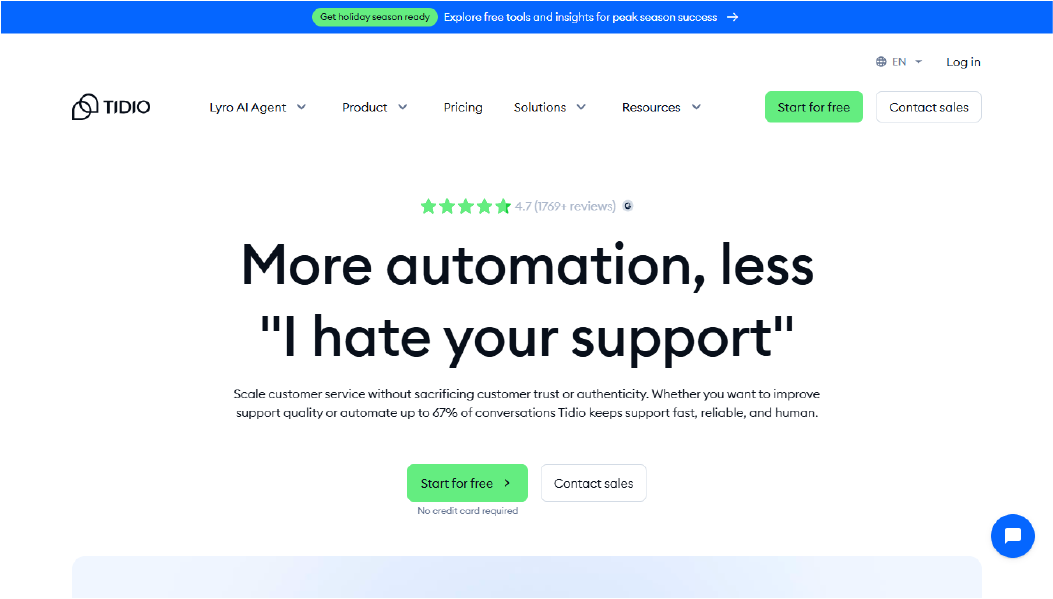
Tidio is a live chat and AI chatbot platform designed for small businesses and online stores. It combines real-time chat with automated responses to help teams manage customer inquiries across websites, email, and messaging apps. Tidio’s simple setup and visual chatbot builder make it easy for teams without dedicated IT resources to start handling customer interactions efficiently.
Why It’s a Strong Gladly Alternative
Tidio is well-suited for teams that prioritize quick customer engagement and simple automation. While Gladly focuses on multi-channel ticket management and SLA enforcement, Tidio simplifies live chat workflows for smaller teams, providing instant responses through AI chatbots and easy integration with e-commerce platforms like Shopify and WooCommerce.
The platform also supports email and Messenger interactions, letting agents respond from a single dashboard. For small businesses that want immediate visibility into chat activity and AI-assisted responses, Tidio streamlines communication and reduces the need for constant manual monitoring.
Tidio Core Strengths
-
AI-powered chatbot for common customer inquiries
-
Live chat widget with typing indicators and visitor info
-
Integration with websites, email, and messaging platforms
-
Visual workflow editor for automated responses
-
Basic reporting and conversation tracking
Why Tidio Is Better Than Gladly
Tidio offers small businesses a lightweight alternative to Gladly, with faster setup and minimal technical dependencies. Gladly provides robust multi-channel ticket management and SLA tracking, but Tidio enables immediate live chat automation and visitor engagement without the need for complex configuration.
For SMBs or e-commerce teams, Tidio helps manage conversations efficiently, automate repetitive questions, and engage visitors proactively. The platform reduces manual workload while giving teams a clear overview of active chats and automated responses, improving response times and customer satisfaction.
Limitations
-
Limited advanced workflow automation compared to Gladly
-
AI responses are primarily for routine queries
-
Less suited for enterprise-scale customer service
-
Reporting features are basic
Best For
-
Small e-commerce stores
-
SMB customer support teams
-
Businesses needing simple live chat automation
-
Teams with minimal technical resources
Pricing Snapshot
-
Subscription-based plans, tiered by feature access
-
Supports website chat and messaging app integrations
-
Scales with number of users and chat volume
-
Free plan available for small teams with basic features
Compare the top Tidio alternatives to find the solution that fits your business like a glove.
13. Zoho Desk - Affordable Multi-Channel Helpdesk
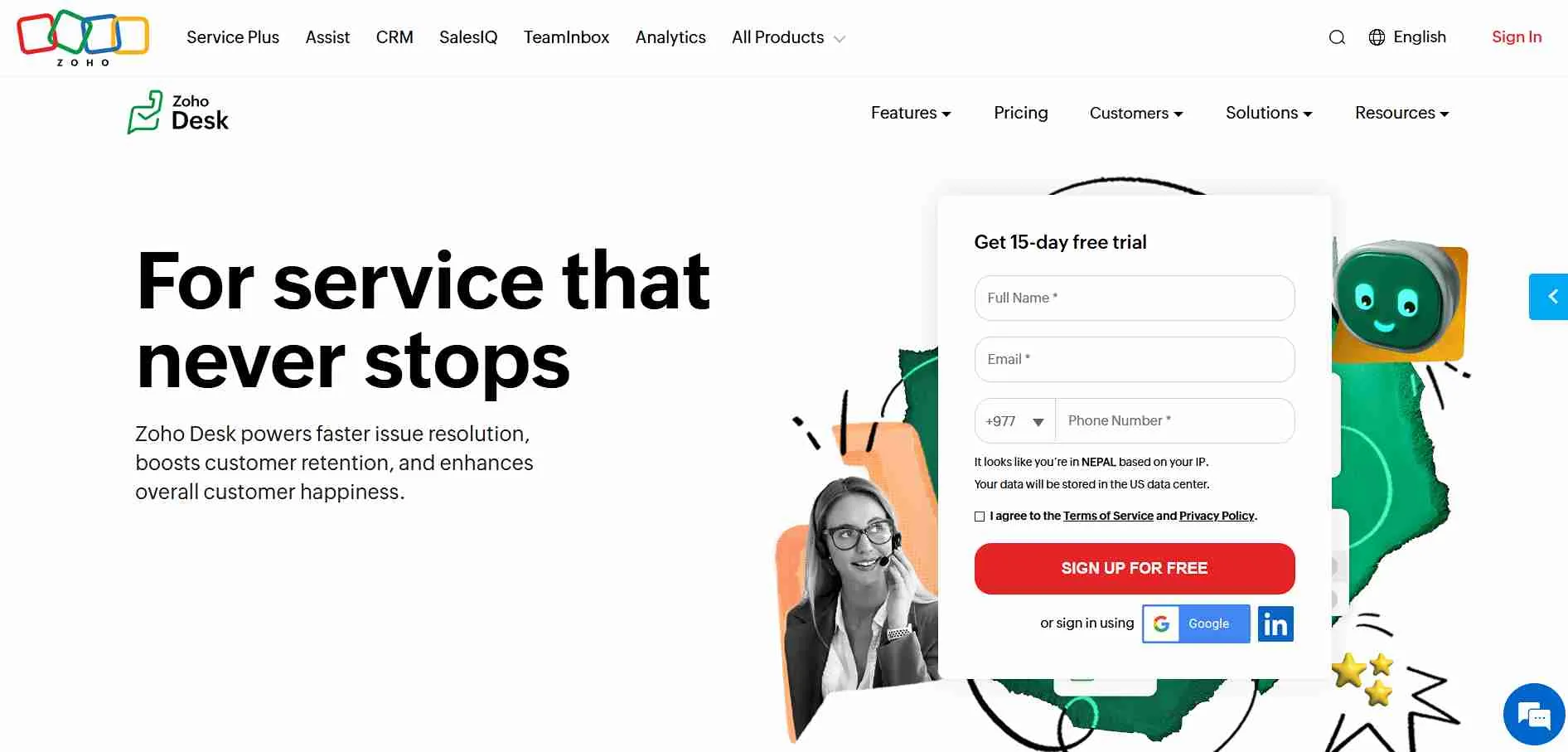
Zoho Desk is a cloud-based helpdesk platform designed to manage customer support across email, chat, social media, and phone channels. It centralizes tickets in a single dashboard and provides automation tools to assign, prioritize, and track customer interactions. Zoho Desk’s simple setup and user-friendly interface make it accessible for SMBs and growing teams without extensive technical resources.
Why It’s a Strong Gladly Alternative
Zoho Desk appeals to teams that need an affordable solution for multi-channel support while maintaining visibility over tickets and agent performance. Compared to Gladly, which focuses heavily on workspace-specific SLA management and ticket workflows, Zoho Desk offers a straightforward interface and automation for small to mid-sized teams.
The platform includes AI suggestions for ticket responses, workflow automation for repetitive tasks, and a self-service portal for customers. Teams can manage customer inquiries efficiently while reducing manual work and keeping track of ongoing issues. For organizations with moderate support volume, Zoho Desk simplifies ticket management and improves response consistency.
Zoho Desk Core Strengths
-
Multi-channel ticket management (email, chat, social, phone)
-
AI-assisted suggestions for faster ticket resolution
-
Workflow automation for repetitive tasks
-
Customer self-service portal with knowledge base
-
Basic reporting and analytics dashboards
Why Zoho Desk Is Better Than Gladly
Zoho Desk provides smaller teams and SMBs a practical alternative to Gladly, focusing on affordability and quick adoption. While Gladly excels at workspace-specific SLA enforcement and multi-team visibility, Zoho Desk enables teams to automate routine processes and manage tickets without a steep learning curve or complex setup.
For businesses looking for a cost-effective help desk with AI-assisted ticket suggestions and simple workflow automation, Zoho Desk reduces administrative effort and keeps customer interactions organized across channels.
Limitations
-
Less advanced SLA and workspace isolation features than Gladly
-
AI suggestions are limited to standard responses
-
Not designed for very high-volume enterprise support
-
Reporting depth is moderate compared to larger platforms
Best For
-
Small to mid-size businesses
-
Customer support teams handling moderate ticket volume
-
SMBs needing affordable multi-channel ticketing
-
Teams seeking easy-to-use workflow automation
Pricing Snapshot
-
Tiered subscription plans based on features and team size
-
Supports email, chat, social media, and phone integration
-
Affordable for small businesses with pay-as-you-grow options
-
Free plan available with limited features
Discover the best alternatives of Zohodesk available in the market
14. Hiver - Gmail-Based Team Collaboration & Support
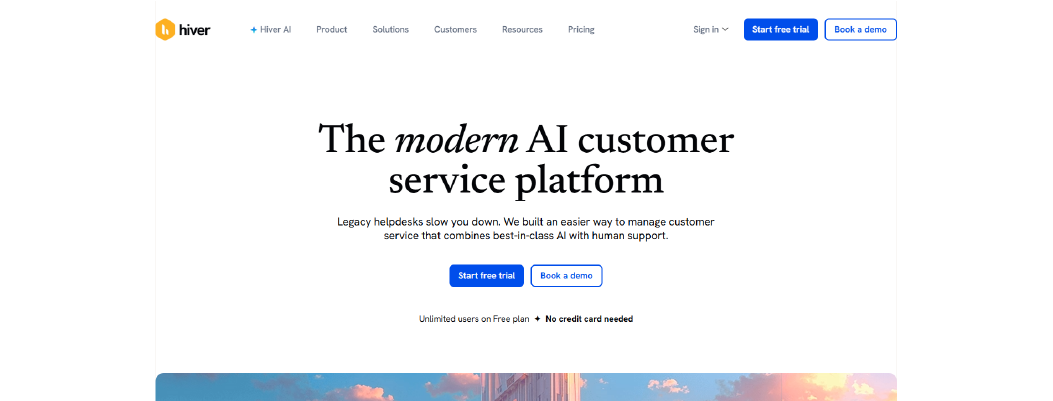
Hiver is a helpdesk solution built directly inside Gmail, allowing teams to manage shared inboxes like support@ or info@ without leaving their email environment. It turns emails into assignable tickets, tracks response times, and lets teams collaborate with internal notes. Hiver works well for teams that prefer email-first customer service while maintaining visibility into workloads and customer interactions.
Why It’s a Strong Gladly Alternative
Hiver is appealing to teams that rely heavily on Gmail for communication and want a lightweight helpdesk to manage shared email conversations. Compared to Gladly, which provides structured workspace-specific ticket workflows and multi-channel automation, Hiver focuses on simplicity and fast adoption for small teams.
The platform provides collision detection to prevent duplicate replies, email templates for consistent responses, and SLA tracking to ensure timely customer support. Teams can coordinate on responses, assign ownership, and monitor ongoing conversations without switching platforms, making it ideal for email-centric workflows.
Hiver Core Strengths
-
Shared Gmail inbox management with ticket assignment
-
SLA tracking for response and resolution times
-
Internal notes for team collaboration
-
Email templates for consistent communication
-
Collision detection to prevent duplicate replies
Why Hiver Is Better Than Gladly
Hiver offers a simpler, email-focused approach compared to Gladly’s broader workspace and multi-channel ticketing. For teams primarily using Gmail, it eliminates the need to train agents on a new interface or manage multiple channels. Hiver enables smaller teams to maintain accountability, track response times, and collaborate efficiently within an environment they already use daily.
It’s a practical option for businesses that want a straightforward, lightweight ticketing system without the complexity of enterprise-focused customer service software.
Limitations
-
Limited multi-channel support (primarily email)
-
SLA and reporting features are basic compared to Gladly
-
Less suitable for high-volume or enterprise-level operations
-
No AI-assisted ticket suggestions
Best For
-
Small teams managing shared inboxes
-
Businesses primarily using Gmail for customer support
-
Teams needing simple SLA tracking and collaboration
-
SMBs seeking lightweight email-based ticketing
Pricing Snapshot
-
Tiered subscription plans based on team size and features
-
Affordable for small businesses and startups
-
Free plan available with limited email support
-
Scales with team size and feature requirements
Evaluate these leading Hivers alternatives and pick the one that aligns with your operational needs.
Gladly Alternatives Compared Side-by-Side
Here’s a detailed comparison to help you evaluate each Gladly alternative based on workflow setup, ticket and thread stability, multi-channel support, automation depth, integration flexibility, usability, and pricing structure in 2026.
This table focuses on operational fit. It highlights which tools reduce manual work, maintain stable conversations, and scale customer support efficiently.
|
Tool
|
Setup Complexity
|
Custom Workflow Control
|
Native Ecommerce Integrations
|
AI Training Control
|
Knowledge Base Integration
|
Reporting Depth
|
Seat-Based Billing Impact
|
|
Chatboq
|
Low (guided onboarding, workspace setup)
|
Strong (SLA enforcement, priority rules, Kanban stages)
|
Web chat + email + messaging
|
Advanced AI-assisted responses with customizable training
|
Upload-based KB support
|
Conversation + SLA dashboards
|
Workspace-based (reduces seat dependency)
|
|
Salesforce Service Cloud
|
High
|
Enterprise-grade workflows
|
Limited direct e-commerce integrations
|
AI-assisted routing & automation
|
Optional KB integrations
|
Enterprise analytics
|
Enterprise-tier pricing
|
|
Zendesk
|
Moderate
|
Custom workflow builder
|
Supports major e-commerce platforms
|
AI-assisted responses
|
Built-in KB
|
Analytics dashboards
|
Tiered per-agent subscription
|
|
Intercom
|
Low
|
Moderate workflow control
|
Limited direct e-commerce
|
AI chatbot with basic training
|
Upload KB articles
|
Conversation insights
|
Flexible per-agent pricing
|
|
Gorgias
|
Low
|
Rule-based ticket workflows
|
Shopify, Magento, WooCommerce
|
Moderate AI for common queries
|
Basic help center
|
Ticket analytics
|
Per-agent subscription tiers
|
|
Freshdesk
|
Low
|
Visual workflow builder
|
Limited
|
AI-assisted workflows
|
Built-in KB
|
Reporting dashboards
|
Tiered per-agent pricing
|
|
Kustomer
|
Moderate
|
Advanced workflow setup
|
Limited direct e-commerce
|
AI automation
|
Built-in KB
|
Advanced analytics
|
Tiered per-agent pricing
|
|
Dixa
|
Low
|
Moderate workflow control
|
Limited
|
Moderate AI control
|
Limited KB
|
Analytics dashboards
|
Flexible tiers
|
|
Front
|
Low
|
Basic workflow rules
|
Limited
|
Basic AI for tickets
|
Limited KB
|
Conversation dashboards
|
Subscription-based per-agent
|
|
Genesys Cloud CX
|
High
|
Enterprise-grade workflow control
|
Limited e-commerce integrations
|
Advanced AI routing & predictive analytics
|
Optional KB
|
Enterprise dashboards
|
Enterprise pricing
|
|
Five9
|
High
|
Call center workflow automation
|
Limited
|
AI-assisted voice & chat routing
|
Limited KB
|
Supervisor dashboards
|
Enterprise seat licensing
|
|
Tidio
|
Low
|
Basic workflow setup
|
Limited
|
AI chatbot for common queries
|
Limited KB
|
Basic analytics
|
Per-agent / subscription tiers
|
|
Zoho Desk
|
Low
|
Moderate workflow control
|
Limited
|
AI-assisted routing
|
Built-in KB
|
Analytics dashboards
|
Tiered per-agent subscription
|
|
Hiver
|
Low
|
Simple ticket workflows
|
No native e-commerce
|
Basic AI support
|
Built-in email KB
|
Standard reporting
|
Per-user subscription
|

 ChatGPT
 Perplexity
 Claude


Leave a Comment
Your email address will not be published. Required fields are marked *
By submitting, you agree to receive helpful messages from Chatboq about your request. We do not sell data.